
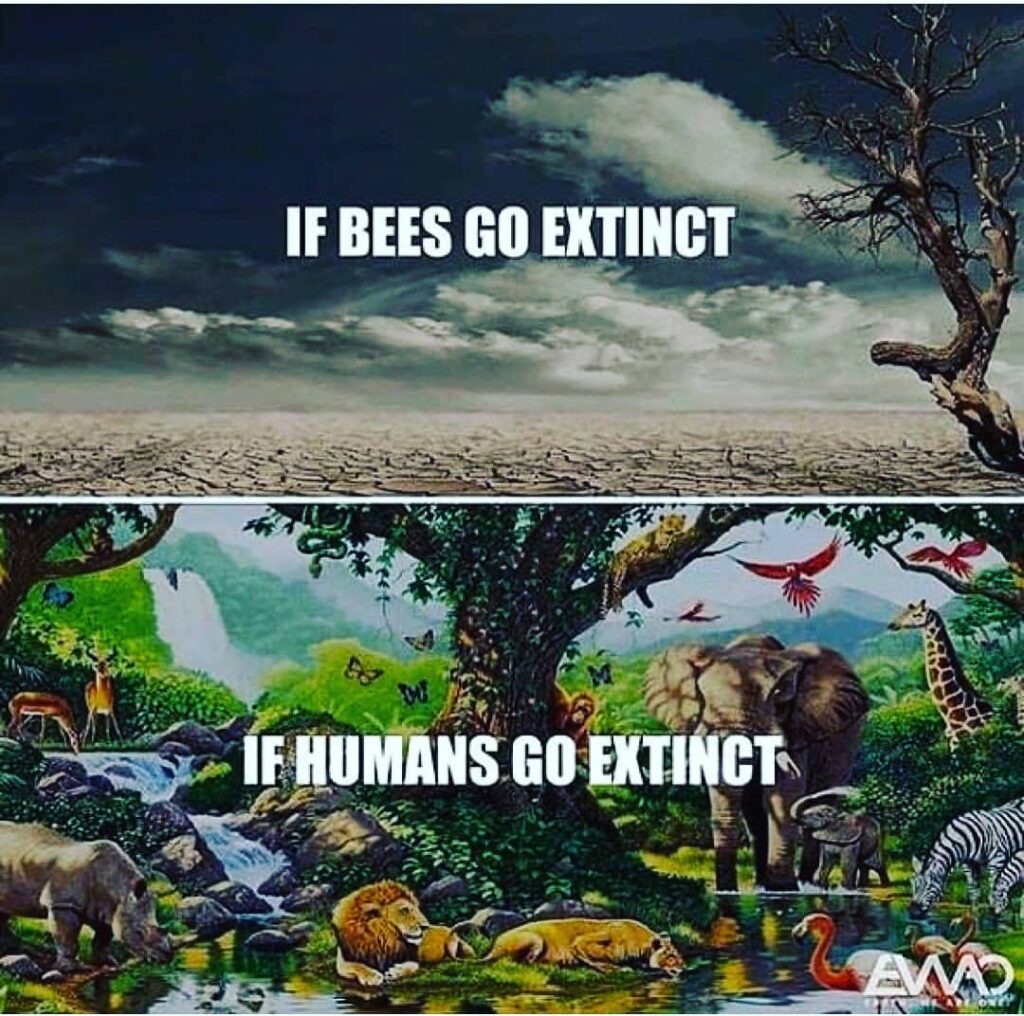
Discover the top twenty species that are in danger of going extinct.
Discover the danger they face, and how these gems can contribute to the preservation of this planet’s biodiversity for coming generations.
Introduction
The Earth is home to a wide variety of living things, all connected in a complex network that keeps nature in balance.
But a quiet disaster is happening around the world, putting this balance at risk.
From the deep sea to the top of mountains, many species are struggling to survive.
The disappearance of these animals, whether they are large and well-known or small and often overlooked, shows a bigger problem—losing diversity in life.
This loss could lead to the breakdown of the natural systems that support all living things, including humans.
Taking care of Earth’s wildlife and protecting the ones in danger isn’t just about saving animals—it’s about keeping our planet healthy and ensuring a better future for everyone.
Main Threats to Endangered Species
The decline and possible extinction of species are rarely caused by just one thing, but instead by many connected problems.
Most of these problems come from human actions.
These issues are complicated and often make each other worse, leading to a big impact on the variety of life.
Habitat Loss and Degradation
This is the biggest danger to endangered species.
As people grow in number and spread out, natural areas are turned into farmland, cities, forests cut down for wood, and roads built.
This makes the space where animals and plants live smaller and breaks it into parts.
These broken parts make populations isolated, leading to problems like inbreeding and genetic issues.
Species that need special, untouched places, like old forests or wetlands, are especially in trouble.
Overexploitation
This is about taking too much from wild animals and plants for different reasons.
Overfishing has greatly reduced many sea creatures.
Poaching and the illegal trade of wildlife threaten many species, like elephants killed for their tusks or tigers hunted for body parts used in traditional medicine.
The demand for exotic pets, plants, and other goods also supports this illegal activity, making some rare species even more valuable to poachers.
Invasive Species
When non-native species are brought in, either on purpose or by accident, they can harm local environments.
These new species can outcompete native ones for food, prey on them, or bring diseases that native animals haven’t seen before.
Pollution
Pollution in different forms harms wildlife.
Chemicals from farming and factories pollute rivers and oceans, creating areas where no life can survive.
Plastic waste threatens marine animals that might eat it or get stuck in it.
Air pollution and pesticides also harm pollinators like bees and butterflies, which are important for the food chain.
Climate Change
Fast and big changes in the climate are making it hard for species to survive.
Higher temperatures, melting ice, and changing weather patterns mess up ecosystems, change where animals travel, and can destroy important habitats, like the ice that polar bears depend on.
For other species, like sea turtles, getting warmer can change the number of male and female babies, which puts their future at risk.
Endangered Land Species
The endangered land species are enlisted by socialvirtualhub.com!
- Amur Leopard
- Snow Leopard
- Malayan Tiger
- Sumatran Orangutan
- Javan Rhino
- Red Panda
- Saola
- Kakapo
- Andean Condor
- Mountain Gorilla
- Cross River Gorilla
- Chimpanzee
- Pangolin
- Monarch Butterfly
- African Forest Elephant
- Asian Elephant
- Indian Elephant
- Black Rhino
- Bornean Orangutan
- African Wild Dog
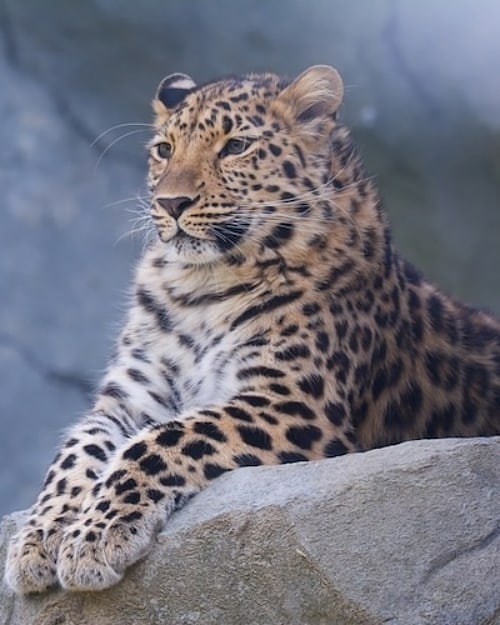
1. Amur Leopard
Population Decline Cause
The Amur leopard is critically endangered because of illegal trade for its fur and bones, habitat loss and fragmentation from logging, farming, and development, and climate change, which is shrinking their habitat and causing them to compete with Amur tigers.
Habitat Fragmentation
Their habitat is split by roads and development, which isolates small groups and makes them more at risk of inbreeding and genetic problems.
Efforts to Protect and Sustain
Conservation efforts are focused on preventing poaching, creating protected areas, and working with local governments in Russia and China to manage land use and reduce conflicts between people and wildlife.
| Region | Total Population |
| Russian Far East, with some individuals crossing into China. | 100 |
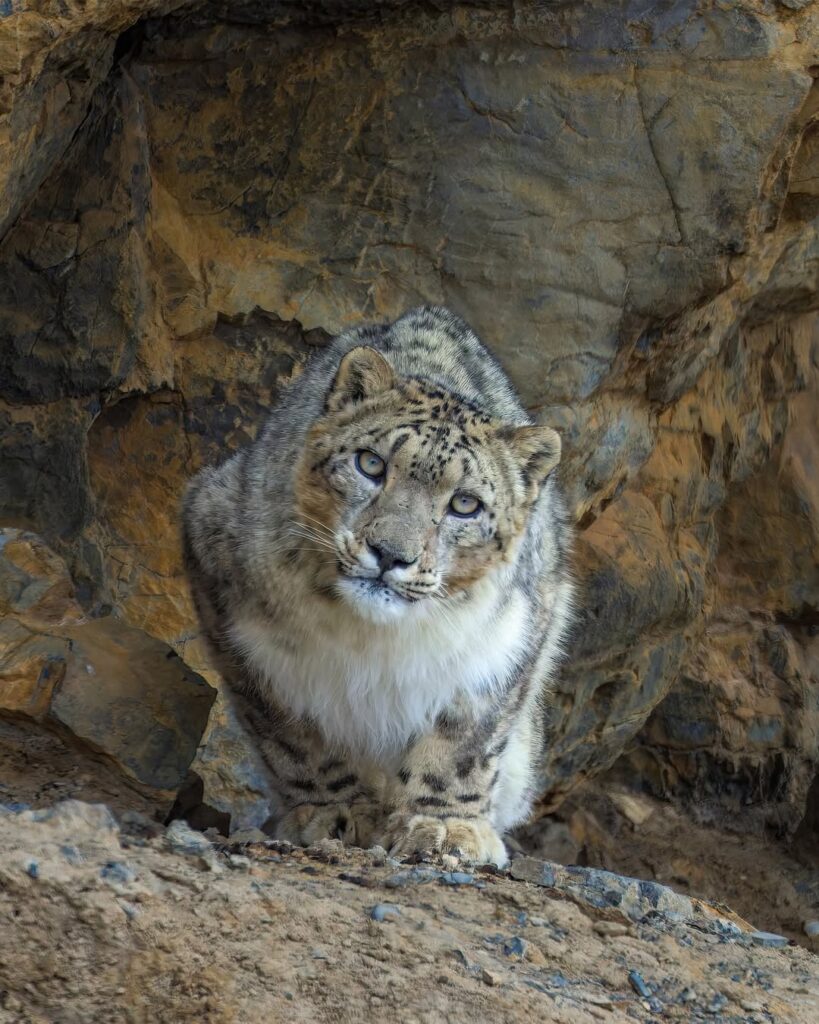
2. Snow Leopard
Population Decline Cause
The main threats to the snow leopard are poaching for their pelts and body parts, retaliatory killings by herders for damaging livestock, habitat loss due to human expansion and climate change, and a decline in their natural prey.
Habitat Fragmentation
The Human and livestock activity, along with changes in tree lines due to climate change, split their high-altitude habitat, isolating populations across the twelve countries they live in.
Efforts to Protect and Sustain
The Conservation includes community-based livestock insurance to help farmers, education to promote coexistence, creating protected areas, and using camera traps and satellite tracking for monitoring and research.
| Region | Total Population |
| Central Asia -China -India -Russia | 3,920 to 6,390 |
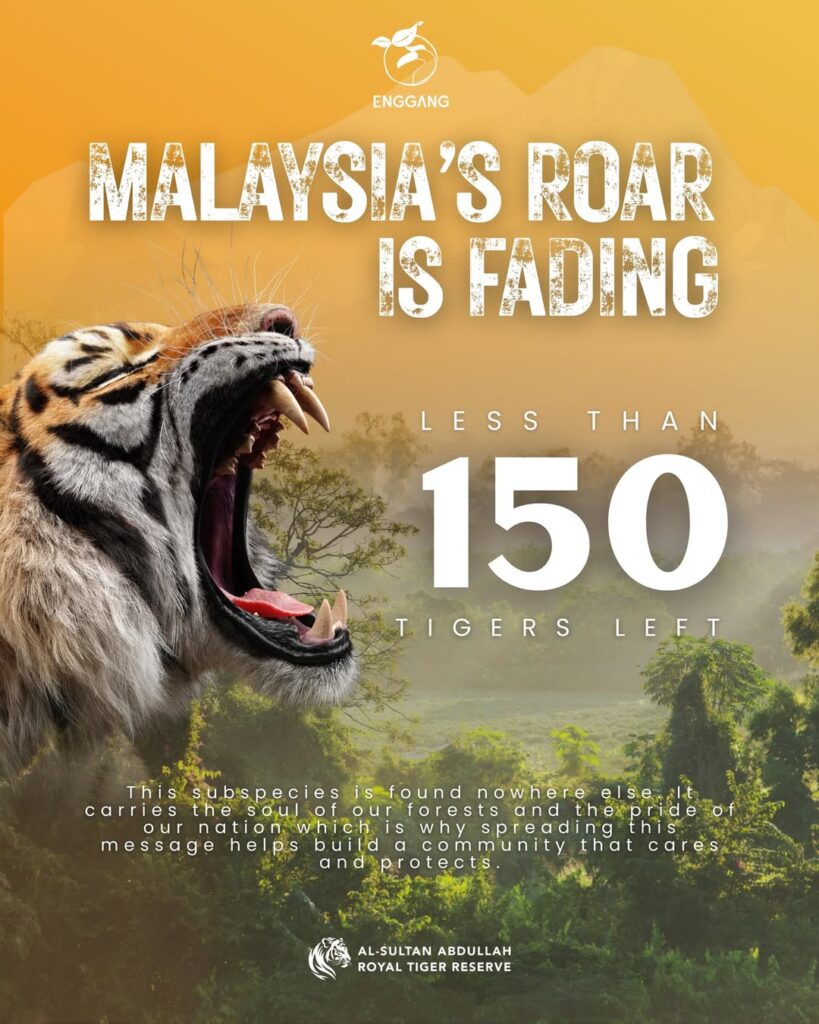
3. Malayan Tiger
Population Decline Cause
The main threats to the Malayan tiger are illegal trade and poaching for their body parts, habitat loss and fragmentation due to deforestation for agriculture and infrastructure, and human-tiger conflict.
Habitat Fragmentation
The infrastructures and land-use changes split their forest homes, limiting their movement and isolating populations.
Efforts to Protect and Sustain
The conservation efforts focus on enforcing anti-poaching laws, protecting and connecting habitats through “green linkages,” and reducing human-tiger conflict by working with local communities.
| Region | Total Population |
| Peninsular Malaysia | 80-150 mature individuals |
4. Sumatran Orangutan
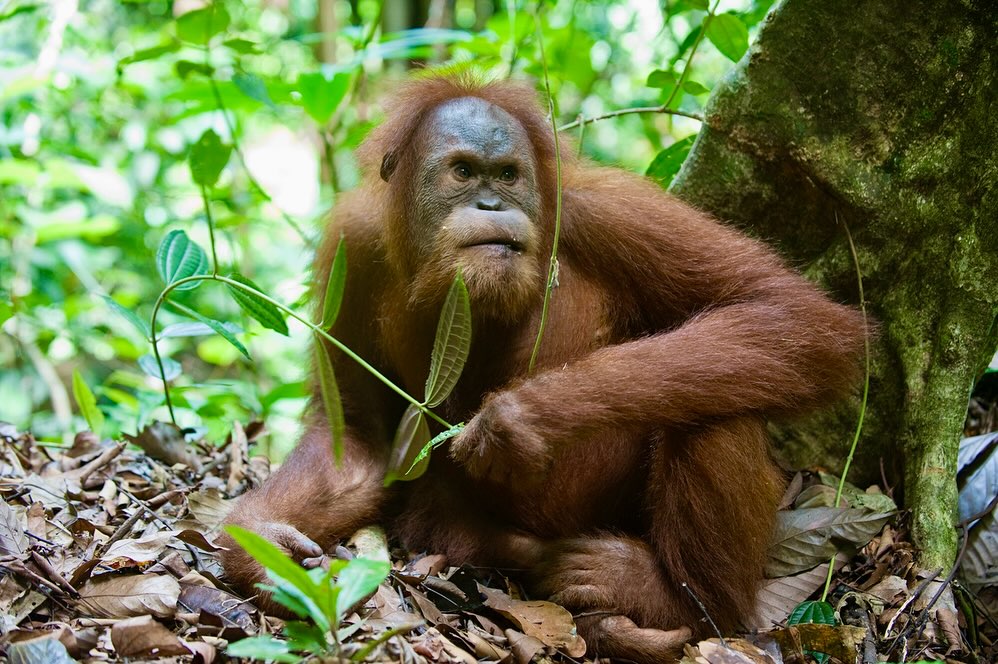
Population Decline Cause
The main threats to the Sumatran orangutan are habitat destruction for palm oil and timber plantations, illegal wildlife trade for the pet market, and being killed when they enter agricultural areas.
The forest fires also pose a major threat.
Habitat Fragmentation
Their dense forest habitat is split by plantations and roads, isolating populations, with only a few large enough to be viable in the long term.
Efforts to Protect and Sustain
The conservation involves working with companies to reduce logging impacts, stopping the illegal pet trade, and implementing land-use plans to reduce human-orangutan conflict.
| Region | Total Population |
| -Sumatra -Indonesia | 13486 |
5. Javan Rhino
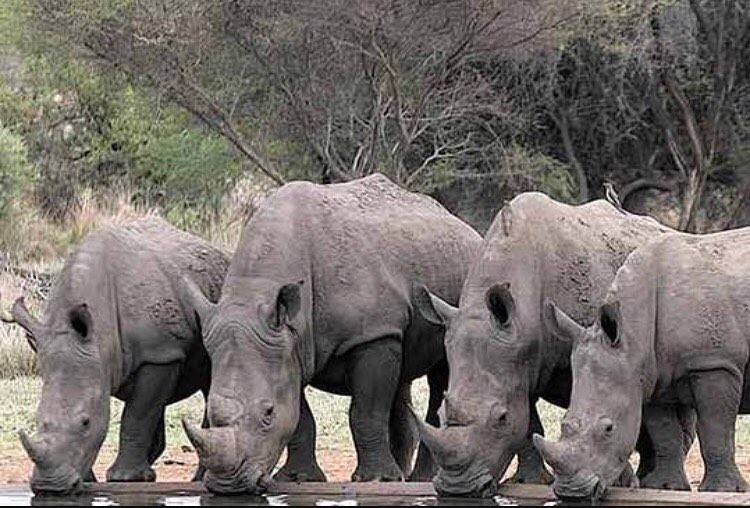
Population Decline Cause
The Javan rhino is critically endangered due to poaching for its horn and extreme habitat loss.
A mainland subspecies was declared extinct in 2011.
Habitat Fragmentation
The remaining population is confined to a single park, Ujung Kulon National Park, making it highly vulnerable to disease and natural disasters.
The invasive arenga palm has also pushed out native food plants inside the park.
Efforts to Protect and Sustain
The conservation focuses on protecting the single population from poaching, removing the invasive palm to restore native food plants, and managing the habitat to ensure it can support the population.
| Region | Total Population |
| -Ujung Kulon National Park -Java -Indonesia | 72 |
6. Red Panda
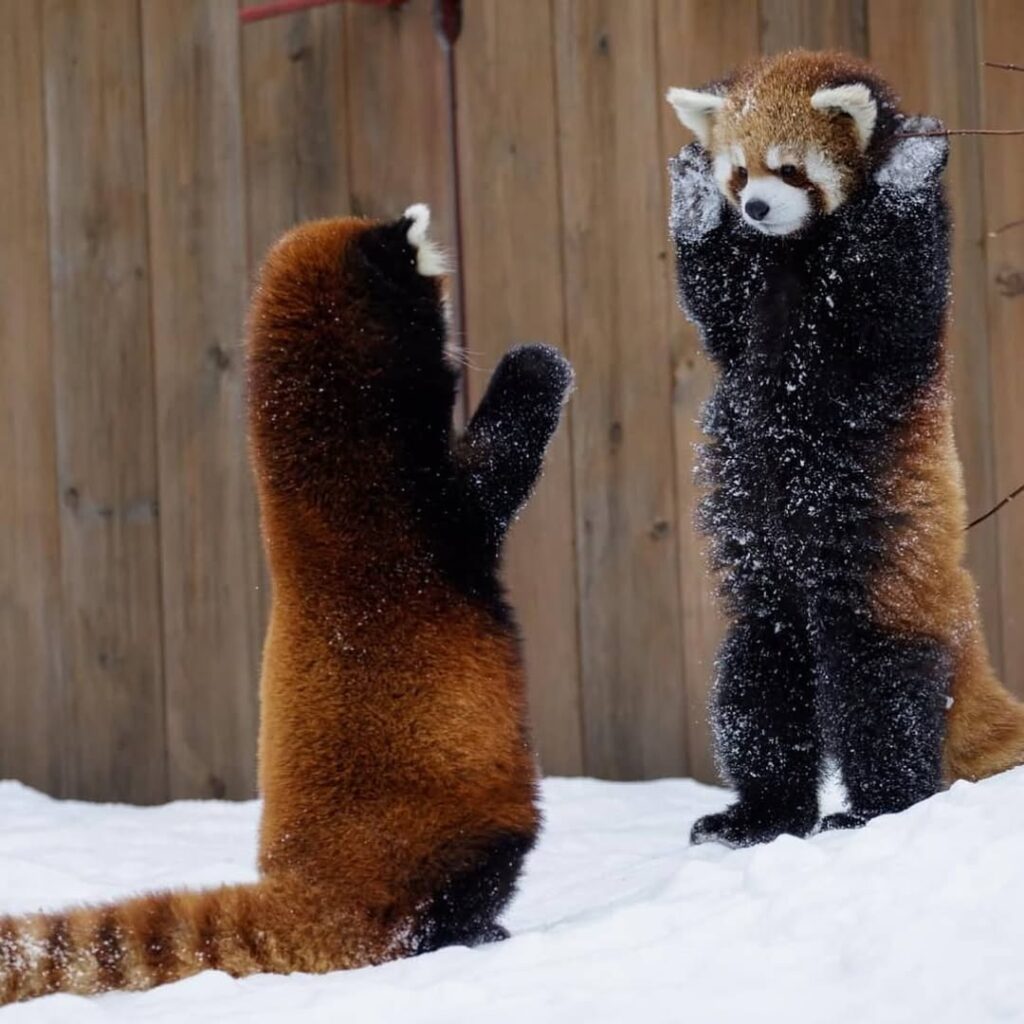
Population Decline Cause
The red panda is threatened by habitat loss and fragmentation from clearcutting, logging, and agricultural expansion.
The poaching for their fur and the illegal pet trade, along with threats from climate change, free-roaming dogs, and accidental trapping, also contribute to their decline.
Habitat Fragmentation
The human activities create isolated populations on mountaintops, leading to a lack of genetic diversity.
Efforts to Protect and Sustain
The conservation includes addressing poverty to reduce poaching, raising public awareness, and creating and protecting habitats, especially outside of protected areas.
| Region | Total Population |
| Eastern Himalayas (Nepal, Bhutan, India, China) | Less than 10000 |
7. Saola Asia Unicorn
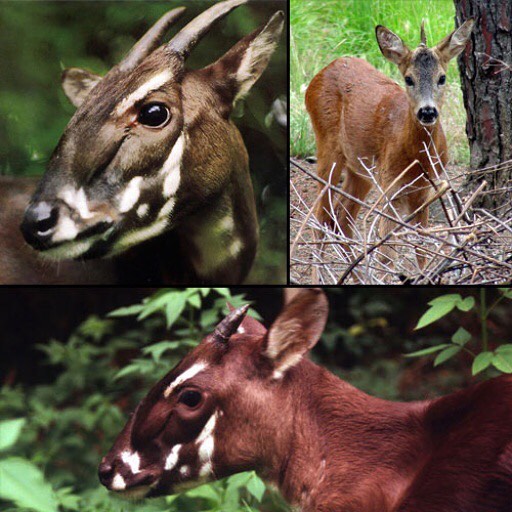
Population Decline Cause
The Saola is not targeted for its parts, but it’s caught accidentally in snares set for other species due to commercial poaching.
Habitat Fragmentation
The species is now found in several small, isolated subpopulations, leading to genetic inbreeding and a skewed sex ratio that makes it hard for males and females to find each other.
Efforts to Protect and Sustain
The conservation focuses on removing snares, starting a captive breeding program to eventually reintroduce them into the wild, and working with local communities who have little incentive to harm the species.
| Region | Total Population |
| Annamite Mountains of Vietnam and Laos | A few dozen |
8. Kakapo
Population Decline Cause
The Kakapo, a flightless parrot, evolved without natural predators and is defenseless against introduced species like rats and stoats.
Its slow breeding cycle and a male-biased population are also major obstacles to recovery.
Habitat Fragmentation
The species has been moved from its original, fragmented habitat to remote, mammal-free islands to protect it from predators.
Efforts to Protect and Sustain
The conservation has focused on controlling predators and managing the population on sanctuary islands.
The biologists have also successfully influenced the sex ratio of chicks by controlling the mothers’ diets.
| Region | Total Population |
| New Zealand | 238 |
9. Andean Condor
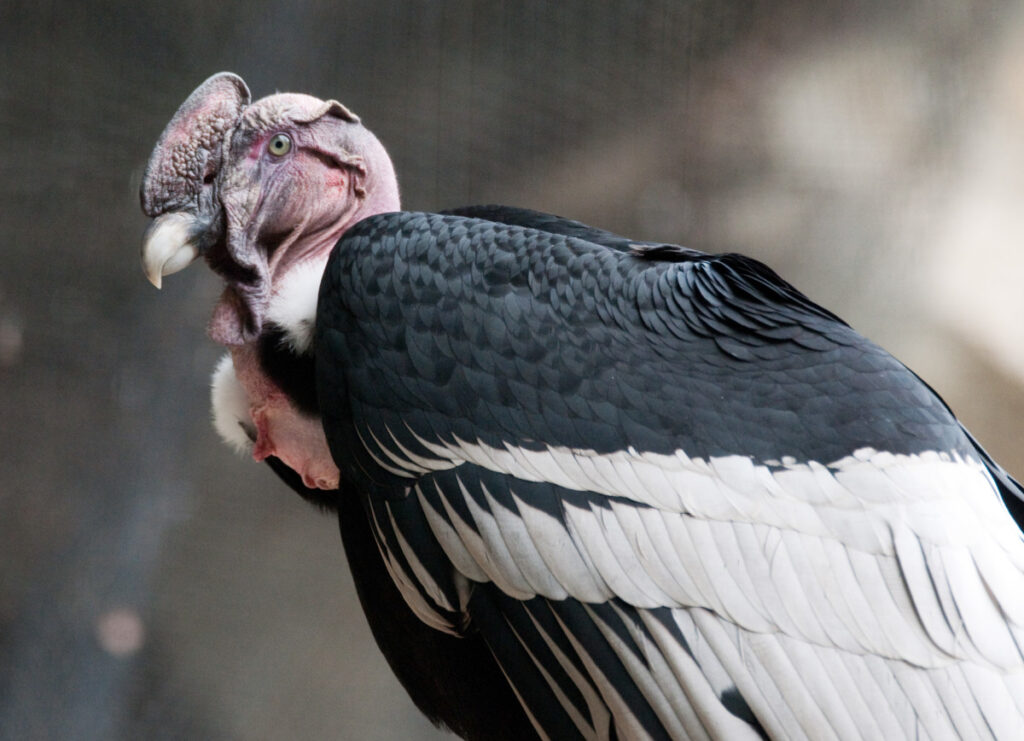
Population Decline Cause
The Andean condor’s population is declining due to human persecution, poisoning from eating poisoned carcasses, and habitat degradation.
Habitat Fragmentation
They have a wide range, but their habitats are damaged by human activities, reducing their ability to find food and suitable roosting areas.
Efforts to Protect and Sustain
The conservation involves extensive population surveys, establishing national conservation plans, and raising public awareness to reduce human-wildlife conflict and support protected areas.
| Region | Total Population |
| Andes Mountains of South America | 10000 |
10. Mountain Gorilla
Population Decline Cause
The mountain gorillas were severely threatened by poaching, habitat deforestation, disease from humans, and civil conflict.
Habitat Fragmentation
Their habitat is divided into isolated pockets in the Virunga Massif and Bwindi Impenetrable National Park, limiting their movement.
Efforts to Protect and Sustain
The conservation has been very successful, leading to a population recovery.
This was achieved through continuous monitoring and veterinary care, removing snares, and actively involving local communities in conservation through ecotourism and revenue-sharing programs.
| Region | Total Population |
| -Virunga Mountains (Congo, Rwanda, Uganda) -Bwindi Impenetrable National Park (Uganda) | Over 10000 |
11. Cross River Gorilla
Population Decline Cause
The Cross River gorilla is critically endangered due to habitat loss and fragmentation, poaching for bushmeat and for infants in the illegal pet trade, and disease from humans.
Habitat Fragmentation
The human encroachment and deforestation have split their habitat into small, isolated patches along the Nigeria-Cameroon border, making it difficult for the groups to interact.
Efforts to Protect and Sustain
The conservation efforts include preserving their fragmented habitats, enforcing anti-poaching laws, and raising public awareness to ensure their long-term survival.
| Region | Total Population |
| Border of Nigeria and Cameroon | 250-300 |
12. Chimpanzee
Population Decline Cause
The chimpanzees are in danger because of habitat loss from logging, mining, and people moving into their area.
They are also hunted for bushmeat and the illegal pet trade, and they are easily infected by human diseases.
The climate change is also making it harder for them to find enough food.
Habitat Fragmentation
The logging and mining create roads that break up their living areas, separating their groups and leading to more contact with humans.
Efforts to Protect and Sustain
People are working to protect chimpanzees by supporting protected areas, making forest corridors to link isolated groups, promoting eco-tourism that doesn’t harm them, and enforcing laws against illegal wildlife trade.
| Region | Total Population |
| Equatorial Africa | 100000-200000 |
13. Pangolin
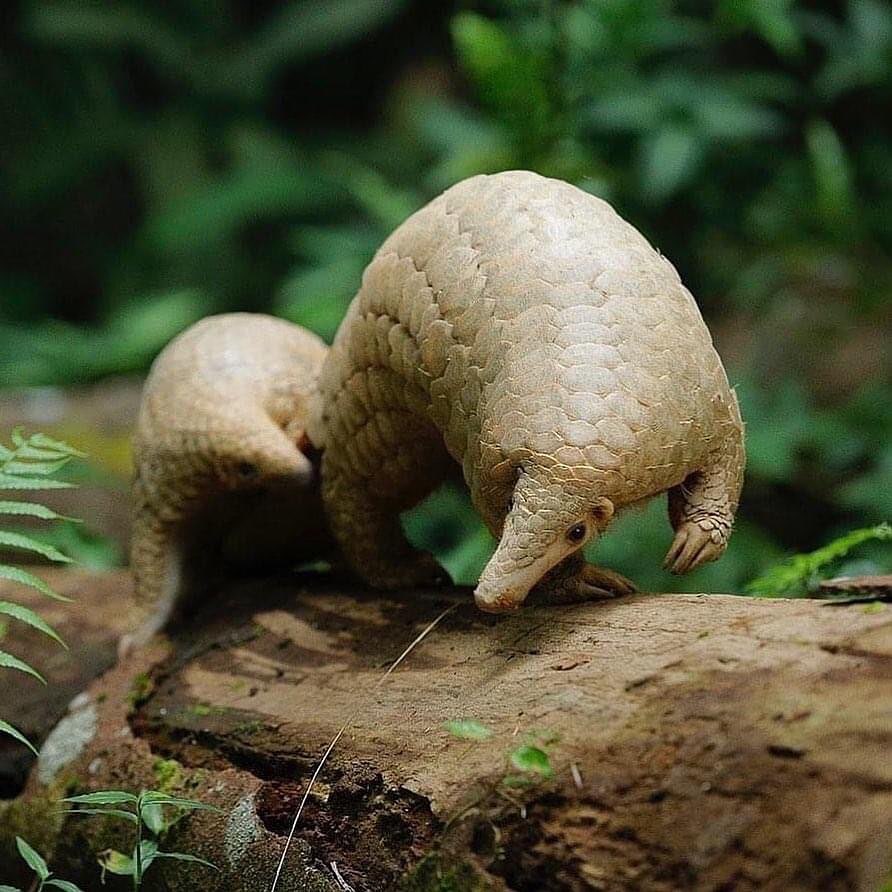
Population Decline Cause
All eight species of pangolin are in danger because of illegal trade and poaching for their meat and scales, which are used in traditional medicine.
Their habit of rolling into a ball makes them easy to catch.
Habitat Fragmentation
While habitat loss is a problem, the main cause of their decline is the illegal wildlife trade, which has made them the most trafficked mammal in the world.
Efforts to Protect and Sustain
The conservation work includes fighting illegal trade by making stronger laws against it, telling people that pangolin scales have no medicinal value, and protecting their natural habitats.
| Region | Total Population |
| -Four Species in Asia -Four Species in Africs | – |
14. Monarch Butterfly
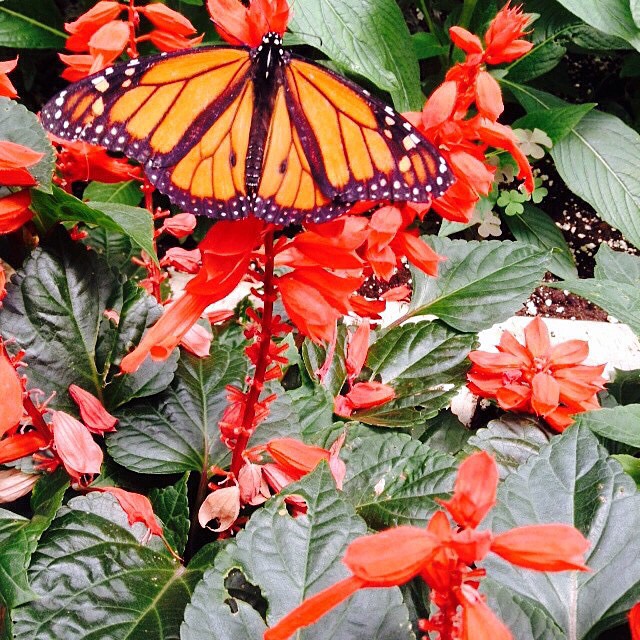
Population Decline Cause
The monarch butterflies are declining because of the loss of milkweed, their main food plant, due to herbicides and farming practices.
The climate change and pesticide use are also playing a role.
Habitat Fragmentation
Their migration routes are broken up by the loss of milkweed and nectar plants, making their long journey harder and more dangerous.
Efforts to Protect and Sustain
People are creating “Monarch Highways” and pollinator paths, encouraging people to plant native milkweed and flowers, and educating the public about the importance of pollinators.
| Region | Total Population |
| North America | 300000 |
15. African Forest Elephant

Population Decline Cause
African Forest Elephants are critically endangered mostly because of illegal poaching for their ivory and habitat loss from farming, development, and mining.
The conflicts with humans also lead to elephants being killed in retaliation.
Habitat Fragmentation
Their forest homes have shrunk by more than half since 1979, and the remaining land is split up, making it hard for them to recover.
Efforts to Protect and Sustain
The conservation includes anti-poaching laws, setting up protected areas, and teaching local communities how to avoid hurting elephants through non-lethal ways.
| Region | Total Population |
| -Westren Africa -Central Africa | Population figures are often combined with savanna elephants, but are estimated to be declining at a high rate. |
16. Asian Elephant

Population Decline Cause
Asian elephants are at high risk from habitat loss and fragmentation caused by human growth and development.
This leads to more conflicts with people, as elephants damage crops, and can result in them being killed.
Habitat Fragmentation
Their habitats are cut up by roads, fences, and farming, which splits populations and reduces genetic diversity.
Efforts to Protect and Sustain
The conservation involves making wildlife corridors to connect isolated groups, increasing patrols to stop poaching, and helping communities find ways to live without conflict with elephants.
| Region | Total Population |
| -South Asia -South East Asia | 50000 |
17. Black Rhino
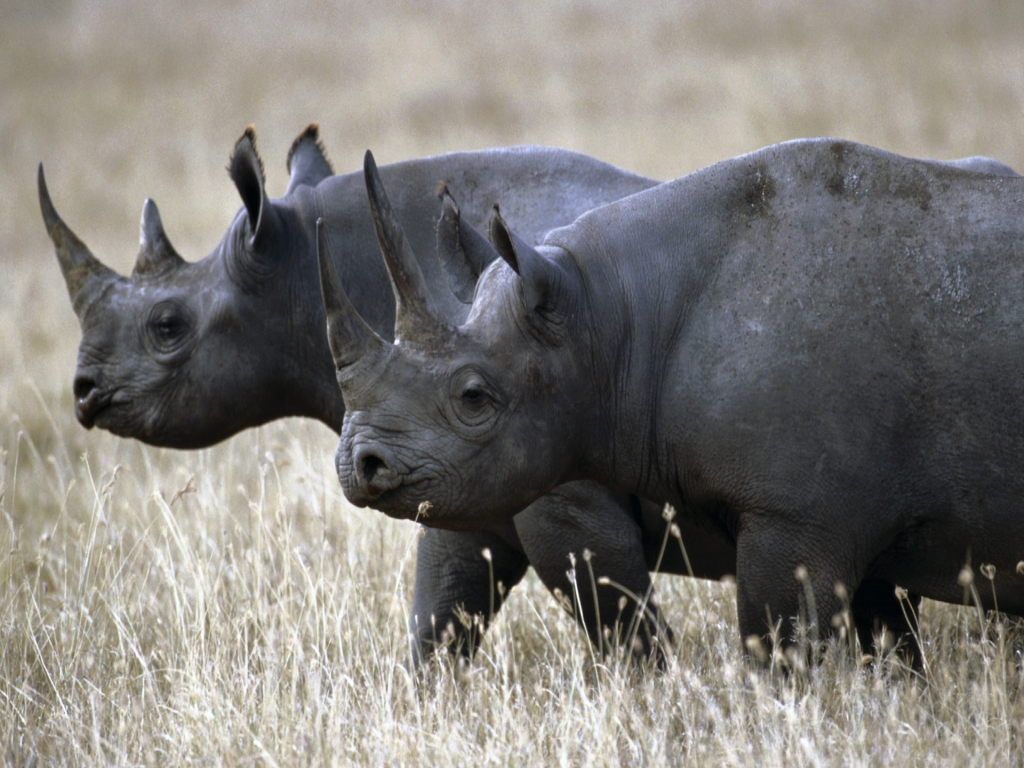
Population Decline Cause
Black Rhinos were nearly wiped out by European hunters and settlers in the 20th century.
Today, the main threat is poaching for their horns, which are valuable in illegal markets.
Habitat Fragmentation
The loss of habitat has made them live in small, isolated groups, which slows breeding and raises the risk of disease.
Efforts to Protect and Sustain
The conservation has helped their numbers double from a low point.
The methods include strong anti-poaching efforts, aerial surveys, and moving rhinos to new areas to spread out the population.
| Region | Total Population |
| -Eastern Africa -Southern Africa | 6788 |
18. Bornean Orangutan
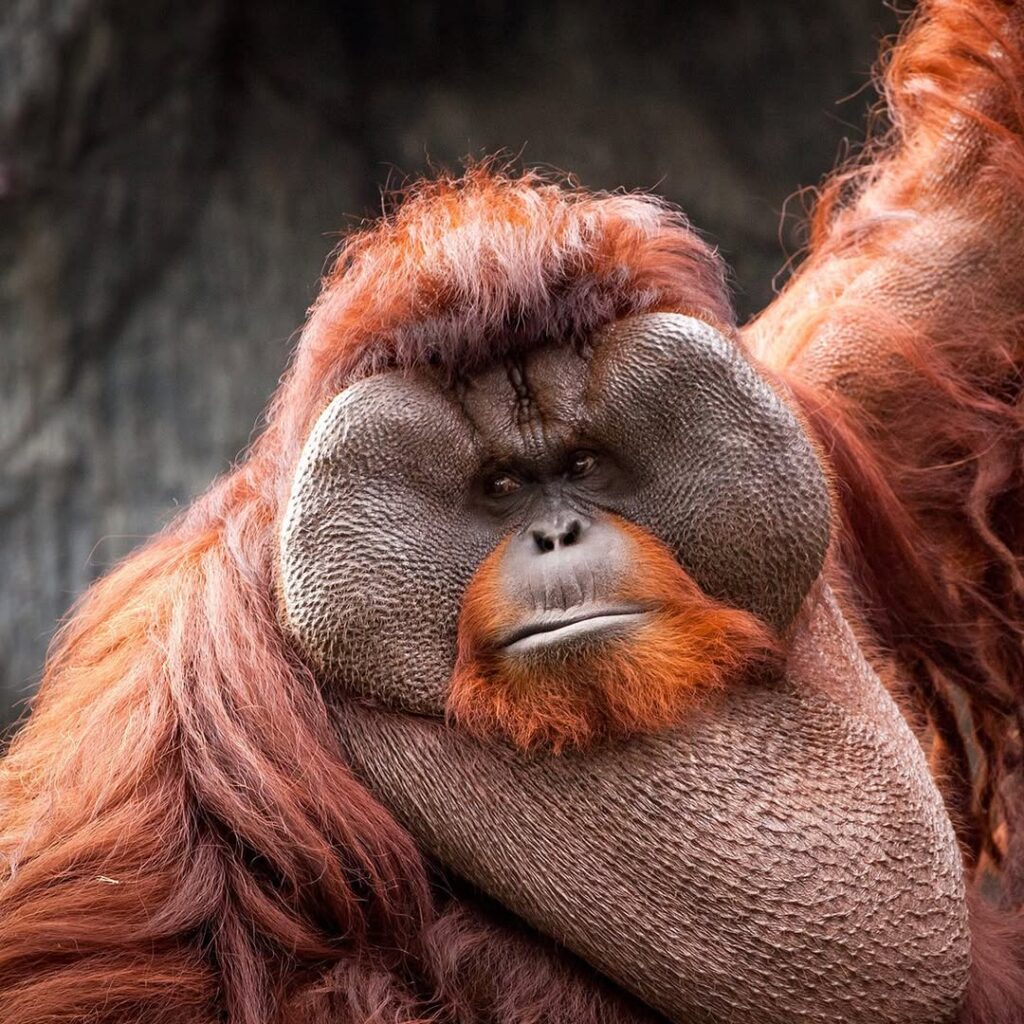
Population Decline Cause
Bornean Orangutans are decreasing because of deforestation for palm oil and logging, forest fires, and poaching for meat and baby capture for the illegal pet trade.
Habitat Fragmentation
The deforestation and fires split up their homes, isolating small groups that can’t find mates or reproduce.
Efforts to Protect and Sustain
People are trying to protect what’s left of their habitat, stop illegal poaching and trade, and raise awareness about their endangered status.
| Region | Total Population |
| -Bornea -Indonesia | 104700 |
20. African Wild Dog
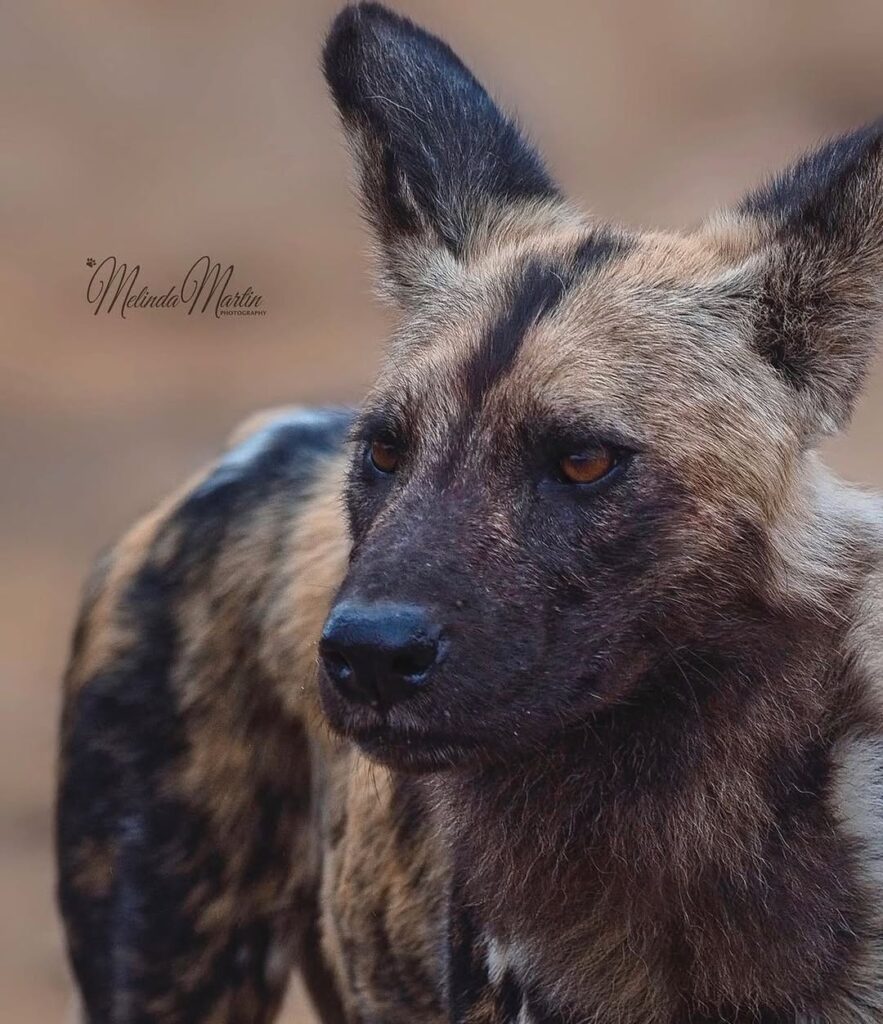
Population Decline Cause
The African Wild Dog is endangered because of several factors.
Their habitat is being broken up, which makes it hard for them to survive.
They often come into conflict with people who raise livestock and game animals.
Habitat Fragmentation
Poachers also pose a threat, as they set snares for bushmeat, which can hurt or kill wild dogs.
Because these animals need a lot of space to live, habitat fragmentation is a big problem.
It causes more conflicts between wild dogs and humans.
In oeder to help and protect them, the best approach is to create large, safe areas where they can live without interference.
Efforts to Protect and Sustain
Additionally, they catch diseases from domestic animals.
The conservation work includes keeping track of wild dog groups to stop them from leaving protected zones.
It also involves teaching local communities about these animals and improving efforts to stop poaching.
| Region | Total Population |
| Sub-Saharan Africa | 6600 |
Endangered Sea Species
Here is list of endangered sea species by virtualsocialhub.com!
- Hawksbill Turtle
- Green Turtle
- Blue Whale
- Fin Whale
- North Atlantic Right Whale
- Gangas River Dolphin
- Indian Dolphin
- Irrawaddy Dolphin
- Hector’s Dolphin
- Vaquita
- Galapagos Penguin
- Sea Lion
1. Hawksbill Turtle
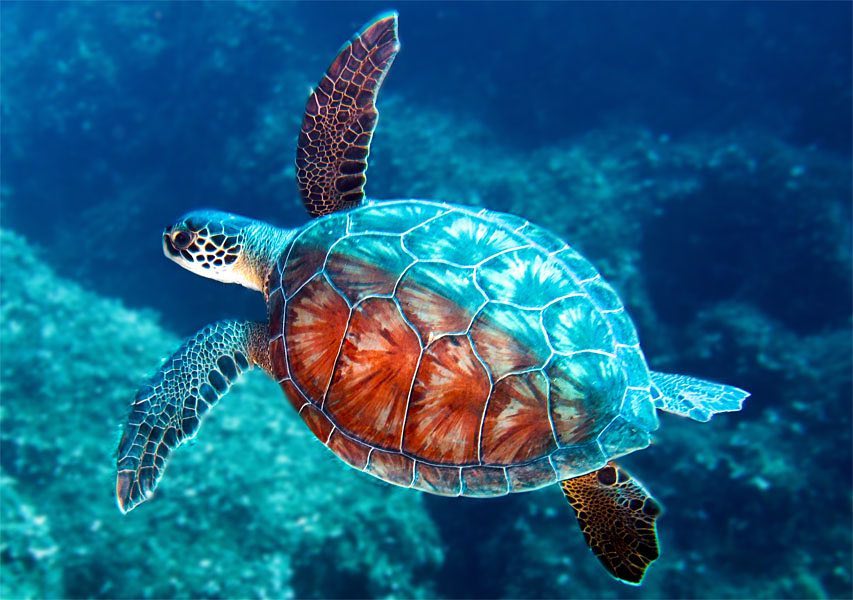
Population Decline Cause
The main reason for their population drop is the illegal trade of their shells, called “tortoise shell,” used to make jewelry and other small items.
Other dangers include the loss and damage of their nesting beaches and coral reefs, getting caught in fishing equipment, and pollution.
Habitat Fragmentation
Their natural habitats are split up by coastal construction and the condition of coral reefs and mangrove areas, which are where they mainly find food.
This makes the turtle groups separate and more at risk.
Efforts to Protect and Sustain
The conservation efforts include stopping the international sale of their parts through agreements like CITES (Convention on International Trade in Endangered Species).
The work is ongoing to save and improve their nesting beaches and coral reefs, reduce bycatch using better fishing tools, and increase public awareness.
| Region | Total Population |
| -Tropical waters of the Atlantic ocean -Pacific ocean -Indian ocean | -Population estimates are difficult, but there are thought to be around 20,000 to 23,000 nesting females per year globally -The species is critically endangered. |
2. Green Turtle
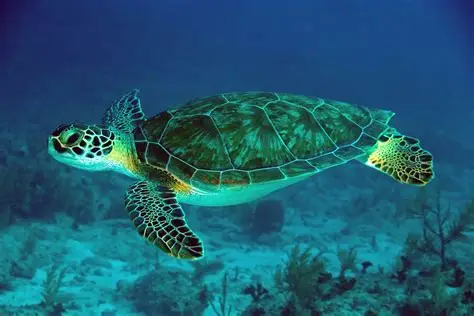
Population Decline Caus
In the past, they were hunted a lot for their meat and eggs.
Now, the main dangers are illegal hunting, getting stuck in fishing gear, loss of habitat, and climate change, which affects where they lay eggs and changes the sex of baby turtles.
Habitat Fragmentation
Their nesting sites are damaged by coastal development and rising sea levels.
The loss and splitting up of their feeding areas affect their ability to migrate and find good places to lay eggs.
Efforts to Protect and Sustain
The success has been achieved by protecting nesting beaches and passing laws to reduce human impact.
The programs also help reduce bycatch through the use of Turtle Excluder Devices (TEDs) in shrimp fishing nets.
| Region | Total Population |
| Tropical and sub-tropical oceans | -Over 200,000 mature individuals. -Some nesting populations are much larger than others, with major sites in Australia and Costa Rica. |
3. Blue Whale

Population Decline Cause
Blue whales were nearly wiped out by commercial whaling in the 19th and 20th centuries.
Today, they face dangers like ship collisions, getting stuck in fishing gear, and noise pollution from ships and sonar, which can disrupt communication and migration.
Habitat Fragmentation
Although they live in large areas, human activities and climate change can break up their feeding and breeding areas.
Efforts to Protect and Sustain
The main effort has been a global ban on commercial whaling.
The current efforts include slowing down ships in areas where whales are common, using sound monitoring to track them and alert ships, and studying ways to reduce entanglement.
| Region | Total Population |
| All of the world’s oceans, but in fragmented populations. | 10000-25000 |
4. Fin Whale
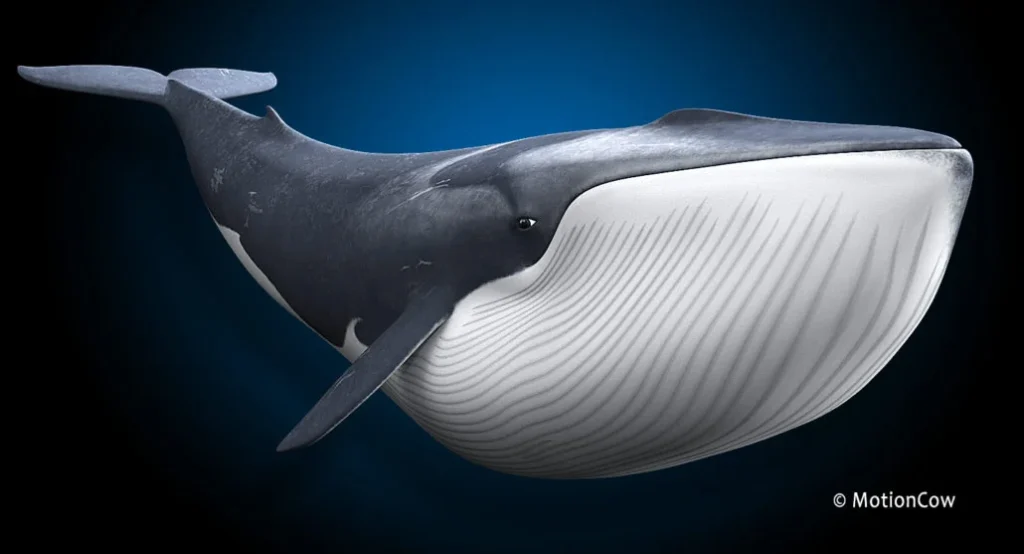
Population Decline Cause
Fin whales were heavily hunted by the whaling industry.
Now, they face threats from ship strikes, getting stuck in fishing gear, and noise pollution.
Habitat Fragmentation
Their open ocean homes are not traditionally fragmented, but human actions and climate change can lower food availability and interfere with their migration.
Efforts to Protect and Sustain
The conservation efforts focus on reducing ship strikes through special shipping routes and speed limits.
There are also ongoing efforts to reduce entanglement and manage ocean noise.
| Region | Total Population |
| All major oceans, from polar to tropical waters. | ~100,000 individuals globally, with an estimated 35,000 to 50,000 in the North Atlantic alone. |
5. North Atlantic Right Whale
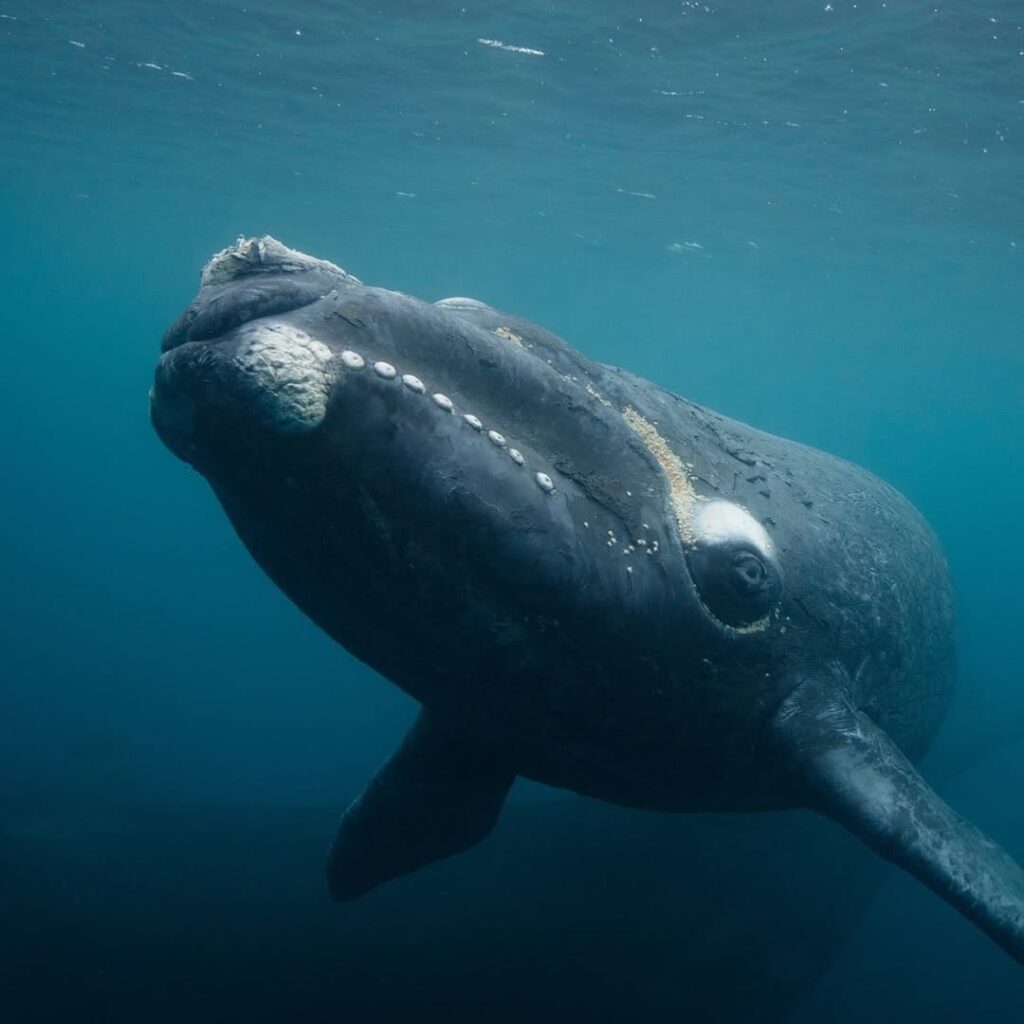
Population Decline Cause
This species is critically endangered mainly because of ship collisions and entanglement in fishing gear.
Their migration paths overlap with busy shipping lanes and fishing areas, making them very vulnerable.
Habitat Fragmentation
The human activities and climate change have divided their key habitats, forcing them into more dangerous waters.
Efforts to Protect and Sustain
The key actions include rules requiring ships to slow down in certain areas and promoting ropeless or “pop-up” fishing gear to reduce entanglement.
A network of air and boat surveys also helps track them and inform sailors.
| Region | Total Population |
| North Atlantic Ocean (migrates between feeding grounds in Canada and calving grounds in the southeastern U.S.) | 365 |
6. Ganges River Dolphin
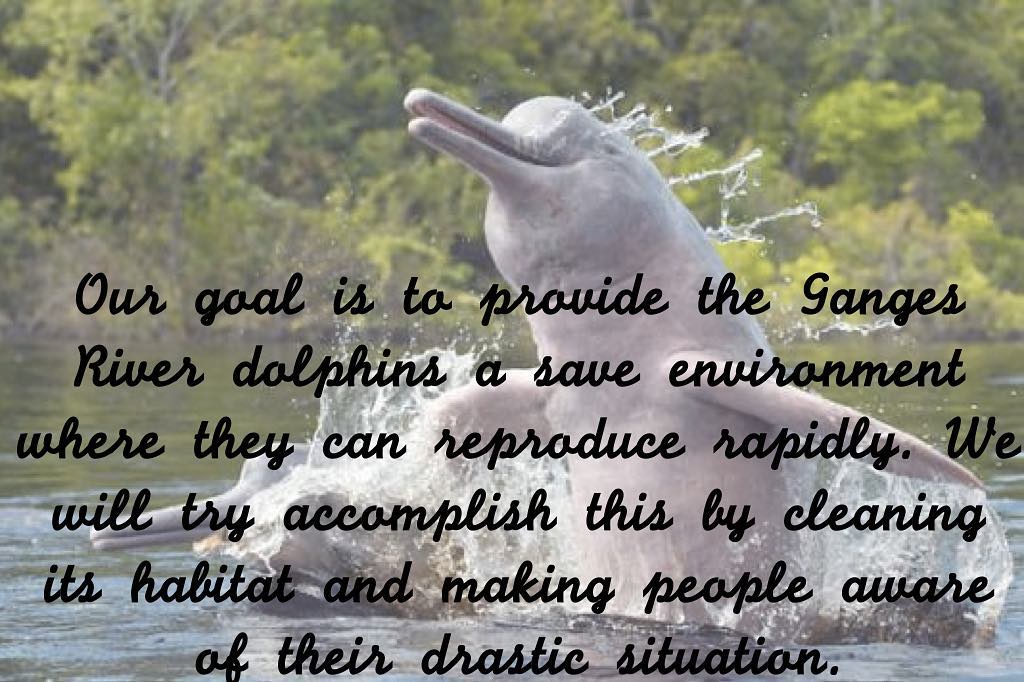
Population Decline Cause
The Ganges River Dolphin is threatened by getting caught in fishing nets (bycatch), the building of dams and barriers that split their habitat, and heavy pollution from industry and farming.
Habitat Fragmentation
The building of dams and barriers has split their river systems, isolating groups and stopping them from finding food or mates.
Efforts to Protect and Sustain
The conservation includes making the Ganges River Dolphin a National Aquatic Animal, setting up protected zones, cutting pollution, and teaching local people about conservation and sustainable fishing.
| Region | Total Population |
| Ganges-Brahmaputra-Meghna river systems in Nepal, India, and Bangladesh. | 12000-18000 |
7. Indian Dolphin
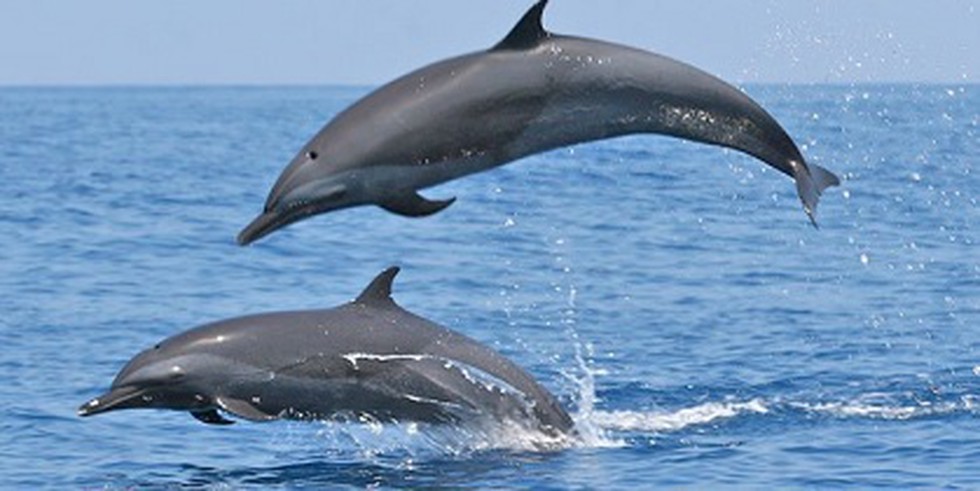
Population Decline Cause
The Indus River Dolphin is under threat from habitat splitting due to dams and barriers for irrigation, which has cut their habitat by 80%.
They also face bycatch, pollution, and being trapped in irrigation canals.
Habitat Fragmentation
The dams and barriers have separated the dolphin population into small, isolated groups, reducing genetic mixing and making them more vulnerable to local threats.
Efforts to Protect and Sustain
The efforts include rescuing dolphins trapped in irrigation canals, improving farming to reduce pollution, and monitoring remaining populations to learn more about their movements and needs.
| Region | Total Population |
| -Indus River, primarily in Pakistan. -A small, isolated population exists in the Beas River, India. | -1,900 in Pakistan. -The Indian population is critically low. |
8. Irrawaddy Dolphin
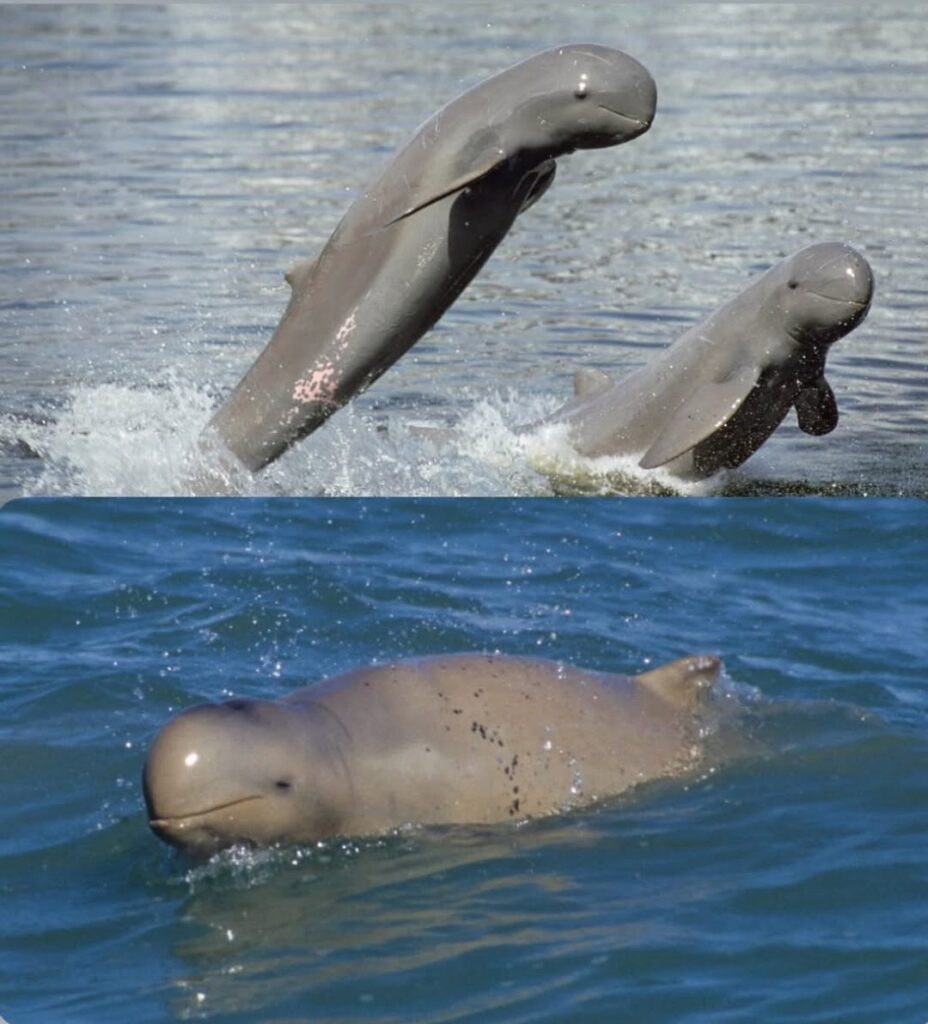
Population Decline Cause
The main threat to the Irrawaddy Dolphin is bycatch in fishing nets, especially gillnets.
They also face habitat loss, pollution, and destructive fishing methods like electrofishing.
Habitat Fragmentation
Their river and coastal homes are broken up and isolated, leaving them exposed to local threats and making it hard for them to find mates.
Efforts to Protect and Sustain
The conservation includes community patrols to monitor and manage protected areas, promoting eco-tourism to give fishermen alternative income, and helping communities use safer fishing tools.
| Region | Total Population |
| Coastal areas of Southeast Asia and Bay of Bengal, and in freshwater rivers such as the Mekong and Irrawaddy. | -7,000 individuals globally, but fragmented into many small, isolated populations. |
9. Hector’s Dolphin
Population Decline Cause
The smallest dolphin in the sea, Hector’s dolphin is mainly threatened by getting caught in fishing nets, especially set nets and trawls, which they can’t see.
The critically endangered Maui’s dolphin faces the same dangers with a very small population.
Habitat Fragmentation
Their coastal habitat around New Zealand is split by human activities, leaving the Maui’s dolphin with a tiny, isolated area.
Efforts to Protect and Sustain
The efforts include creating marine protected areas, stopping or limiting the use of harmful fishing gear in their habitat, and starting programs to track populations and educate people about how to stay safe around dolphins.
| Region | Total Population |
| Coastal waters of New Zealand, with two subspecies. | 15000 |
10. Vaquitta
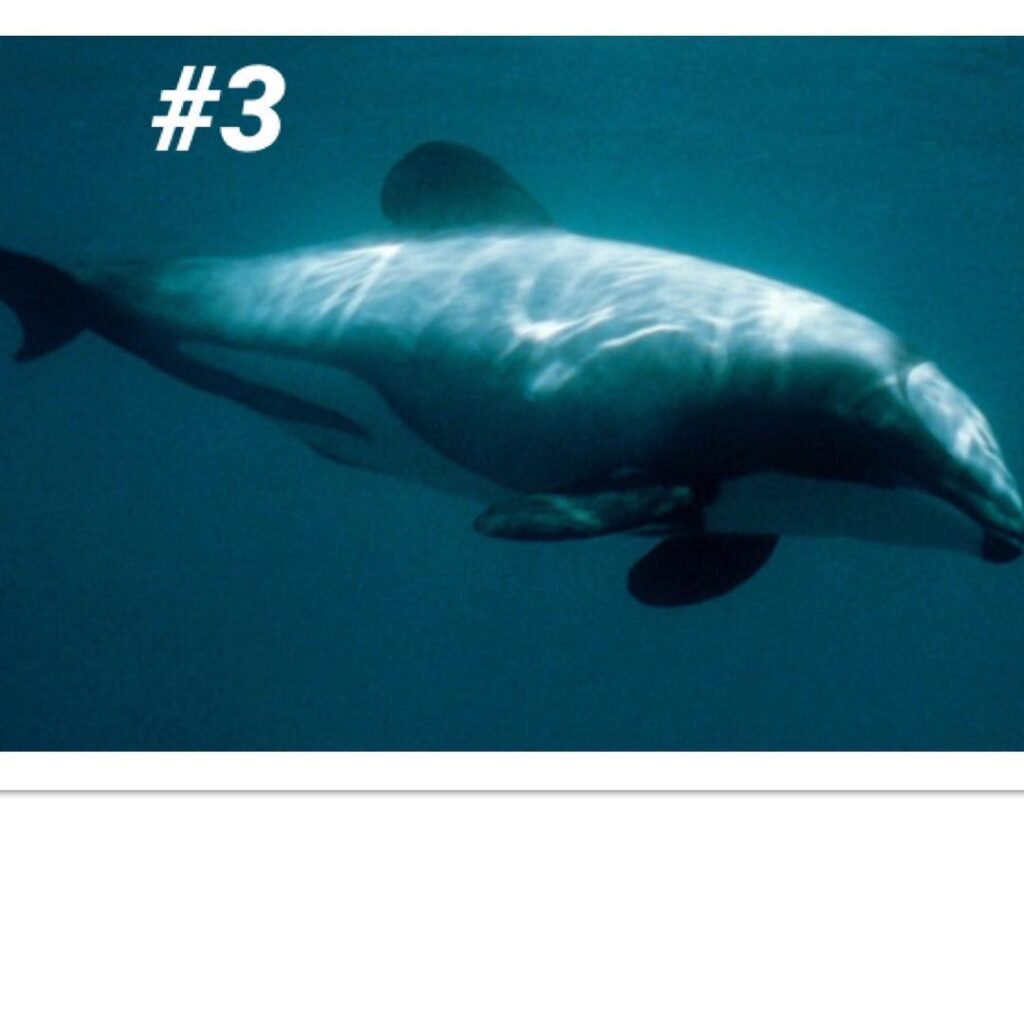
Population Decline Cause
The numbers of vaquitta are dropping mainly because of being caught in illegal gillnets used to catch totoaba fish.
The swim bladders of totoaba are very valuable in the black market.
Habitat Fragmentation
The vaquita lives in a very small area in the northern Gulf of California.
This small range makes it very easy for the species to be affected by threats.
Efforts to Protect and Sustain
The main goal is to stop the illegal trade of totoaba and remove the gillnets from the vaquita’s habitat.
This includes working together internationally, increasing patrols to catch illegal fishing, and supporting local fishermen with other ways to earn a living.
| Region | Total Population |
| Northern Gulf of California, Mexico. | 8-13 |
11. Galapagos Penguin
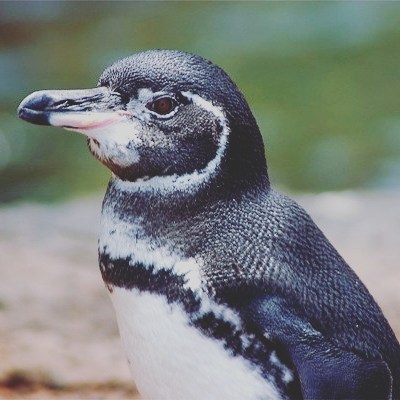
Population Decline Cause
The Galapagos Penguin is at risk because of climate change.
The events like El Niño make the ocean warmer, which reduces the amount of food the penguins have.
The overfishing and pollution also play a role in their decline.
Habitat Fragmentation
These penguins are only found on a few islands in the Galapagos.
Their small and isolated groups make them more sensitive to changes in the environment.
Efforts to Protect and Sustain
To help the Galapagos Penguin, areas of the ocean are protected to limit fishing and other harmful activities.
The scientists monitor sea temperatures and food levels to check the penguins’ health.
If needed, they also use captive breeding programs.
| Region | Total Population |
| Galapagos Islands, Ecuador. | 1200 |
12. Sea Lion
Population Decline Cause
Although many sea lion populations are doing well, some are in trouble because of getting tangled in fishing gear, people feeding or disturbing them illegally, and diseases.
The pollution from chemicals can also harm their health.
Habitat Fragmentation
The activities by people near where sea lions rest and breed can change their behavior and decrease the number of safe places for them to rest.
Efforts to Protect and Sustain
The sea lions are protected by laws like the Marine Mammal Protection Act (MMPA).
There are also efforts to teach people to keep a safe distance and not feed wild sea lions.
The programs are in place to rescue sea lions that are tangled or stranded.
| Region | Total Population |
| Widely distributed in the subarctic to tropical waters of the global ocean, with the notable exception of the North Atlantic. | -Total population numbers vary widely by species. -For example, the California sea lion population is stable and abundant, while Steller sea lions are considered endangered in some region. |
Conclusion
The struggle to save endangered species shows how important it is for humans to take care of Earth’s variety of life.
As dangers like losing homes for animals, changing weather patterns, and illegal hunting grow stronger, many species are in real trouble.
The work to help these animals—ranging from stopping poachers and repairing their homes to international conservation deals and local community efforts—is all part of a bigger promise to make the planet healthier.
By understanding that the survival of these species is directly tied to our own, we can come together to make sure future generations live in a world full of life, where the quiet danger of extinction is replaced by a lively and flourishing natural world.
FAQs
1. Why is it important to protect endangered species?
Protecting endangered species helps keep ecosystems balanced, supports human survival by maintaining natural systems, and preserves biodiversity for future generations.
2. What are the main causes of species becoming endangered?
The biggest causes include habitat loss, overhunting or poaching, pollution, invasive species, and climate change.
3. How does losing a single species affect humans?
The loss of one species can disrupt food chains, pollination, clean water, climate regulation, and other natural systems that humans rely on.
4. Can extinct species ever come back?
Once a species is extinct, it’s gone forever in nature. Some scientists are exploring “de-extinction” using technology, but preventing extinction is far more effective.
5. What are some examples of critically endangered species?
Examples include the Vaquita, Hawksbill Turtle, Black Rhino, Pangolin, and African Forest Elephant.
6. How does climate change impact endangered species?
Climate change alters habitats, food availability, and breeding patterns, making survival harder for many species like polar bears, sea turtles, and penguins.
7. What role do communities play in protecting species?
Communities help through eco-tourism, reducing poaching, planting native plants, and spreading awareness about conservation.
8. How can individuals help protect endangered species?
People can help by reducing waste, avoiding products made from endangered animals, supporting wildlife organizations, and protecting natural habitats.
9. Are global efforts making a difference in saving species?
Yes, global efforts like CITES, marine protected areas, and anti-poaching laws have helped recover species such as the humpback whale and the giant panda.