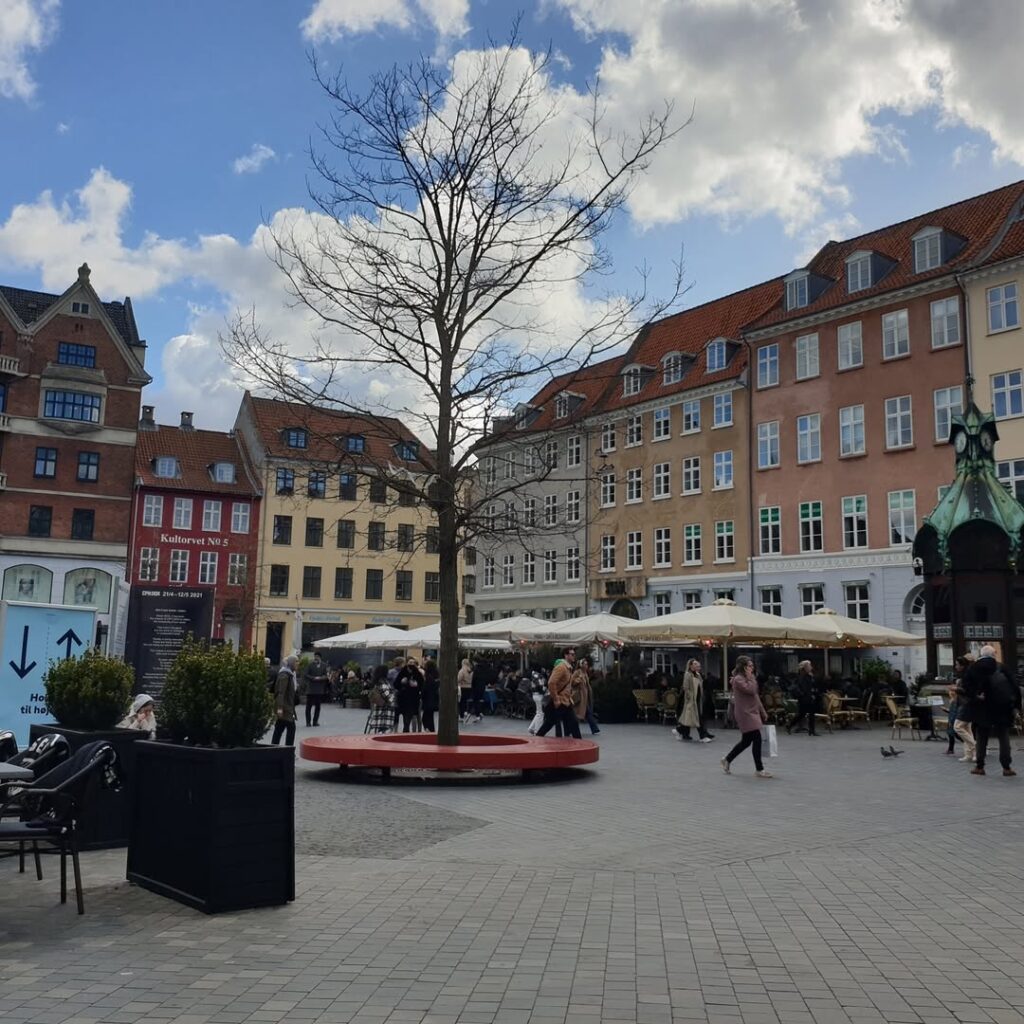
Discover Denmark’s most breathtaking landmarks from historic castles to modern architectural wonders.
Let’s go through a journey through history and beauty in discovering the country’s most iconic sites, from its rich heritage to its incredible landscapes along with virtualsocialhub.com
Introduction
The country of Denmark, with its very rich history and breathtakingly beautiful landscapes, hosts some of the world’s most breathtaking landmarks.
From medieval castles to modern architectural wonders, each site has a story of the cultural and historical evolution of the country.
Whether you’re exploring the fairy-tale charm of Kronborg Castle, marveling at the futuristic design of the Copenhagen Opera House, or stepping back in time at Jelling’s ancient runestones, Denmark offers an unforgettable journey through history and beauty.
Get ready to discover the iconic landmarks that make this Scandinavian gem a must-visit destination!
Key Aspects of Iconic Landmarks of Denmark
Historical Significance
Denmark offers centuries old castles, fortresses, and Viking ruins that speak about its glorious past.
Kronborg Castle is famously known as the site of Shakespeare’s Hamlet, which is declared a UNESCO World Heritage site.
The Jelling Runestones, often referred to as “Denmark’s birth certificate,” date back to the 10th century and mark the transition from Norse paganism to Christianity.
Roskilde Cathedral, where Danish monarchs have been buried for centuries, is an architectural masterpiece of medieval Europe.
Architectural Marvels
The Black Diamond Library is an extension of the Royal Danish Library, which has a bold black granite facade and blends historic and modern elements.
Frederiksborg Castle, a masterpiece in Dutch Renaissance style, is the home of Denmark’s National History Museum.
Cultural Significance
Danish landmarks have significant cultural importance that inspires literature, music, and cinema around the world.
The Hans Christian Andersen Museum in Odense commemorates the life of the world-famous fairy tale writer.
ARoS Aarhus Art Museum has a famous rainbow panorama that defines Denmark’s thriving modern art.
Scenic Beauty
Many of Denmark’s landmarks are set amidst breathtaking natural landscapes.
Mons Klint, Denmark’s white chalk cliffs, offers panoramic views of the Baltic Sea.
The Faroe Islands, a part of the Kingdom of Denmark, features dramatic cliffs, waterfalls, and scenic hiking trails.
Egeskov Castle, set in lush gardens and surrounded by a moat, is a perfect blend of history and natural beauty.
Tourism
These are some of the main attractions in Denmark which attract millions and millions of people every year.
The Little Mermaid Statue in Copenhagen is inspired by the fairy tale of Hans Andersen and is said to be the most photographed statue in the world.
Legoland Billund is where the LEGO company was founded. It is an absolute must-go for families or toy lovers.
Amalienborg Palace, the royal residence, offers daily guard-changing ceremonies, attracting crowds from around the world.
Sustainability
Denmark is a leader in sustainable architecture and eco-friendly landmark preservation.
The CopenHill Urban Mountain, a ski slope built on top of a waste-to-energy plant, is an example of innovative green design.
Many historic destinations, such as castles and cathedrals, are restored sustainably while preserving original appeal.
UN17 Village in Copenhagen is one of the future eco landmarks that takes sustainability goals of the United Nations.
Landmarks for Denmark weave together history, culture, and innovation, making the country a really interesting destination.
Denmark’s Most Breathtaking Landmarks
The virtualsocialhub.com categorized Denmark’s landmarks by states and cities making it easier to prospect the rich heritage and culture:
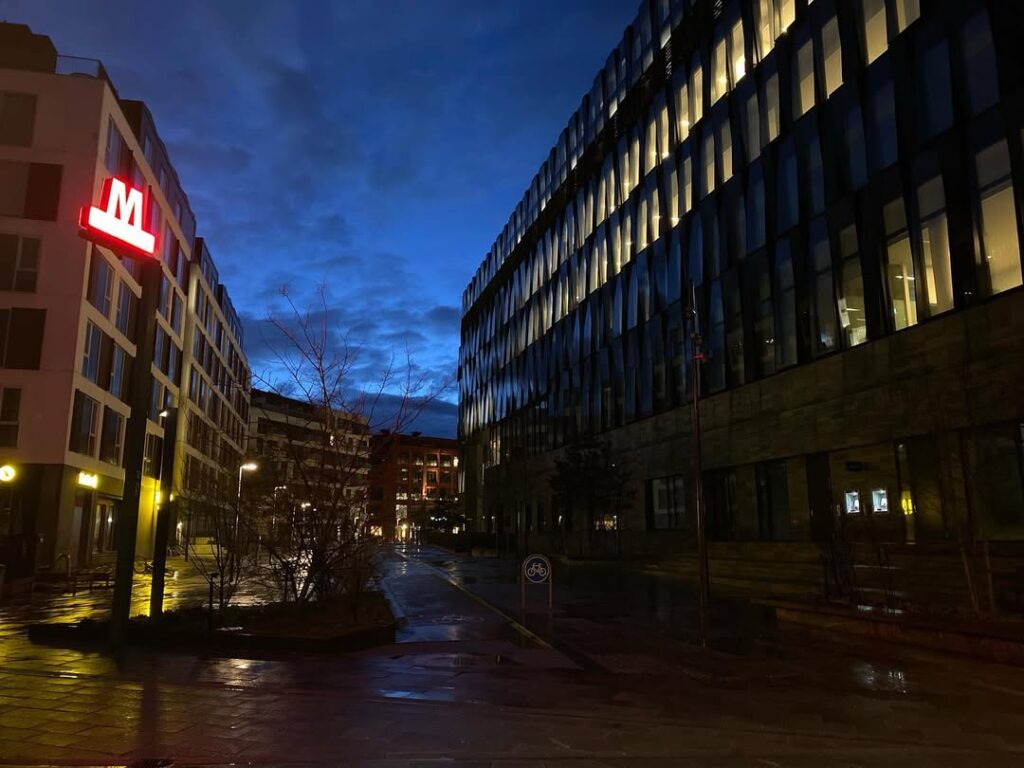
Landmarks in Copenhagen
- Nyhavn
- The Little Mermaid
- Tivoli Gardens
- Christiansborg Palace
- Rundetaarn (Round Tower)
- Amalienborg Castle
- Rosenborg Palace
- Freetown Christiania
- Botanicla Garden
- The Marble Church
1. Nyhavn
Overview:
Nyhavn was built in the 17th century as a commercial port that played a crucial role in the trade and maritime activities.
The tourists and locals enjoy going here.
The historical significance of this area is powerful because the great Danish writer, Hans Christian Andersen, lived in different houses along Nyhavn at different times in his life.
Specific Features:
The place is characterized by a line of colorful 17th- and 18th-century townhouses, which run along the canal.
The Historical wooden ships are docked along the waterfront in this district, which further adds to the charm of this place.
The visitors can also take a boat tour starting from Nyhavn, exploring Copenhagen’s canals.
This area gets really crowded in summer as all outdoor seating areas get packed with people having food and drinks near the water.
Architectural Design:
Nyhavn displays architecture in the classical Dutch Renaissance fashion, characterized by narrow, high houses with stepped gabled facades and brilliant colors. Mainly, most of the houses are built out of brickwork and wood with the architecture styles of that particular era. Wooden piers complement cobblestone streets in emphasizing the old-maritime culture prevalent in this district.
| Architectures | 17th- and 18th-century townhouses |
| City | Copenhagen |
| Year | Established between 1670 and 1673 |
2. The Little Mermaid
Overview:
The Little Mermaid statue is probably one of Copenhagen’s most identified symbols, following the inspiration that came from a famous fairy tale by Hans Christian Andersen.
Established in 1913, this was a donation to the town by Carl Jacobsen, whose father founded the Carlsberg Breweries.
Despite its petite size, this statue is also one of the most visited landmarks in Denmark.
Specific Features:
The statue represents a mermaid sitting on a rock gazing longingly at the shore. However, the sculptor, Edvard Eriksen, used his wife as the model for the body.
Architectural Design:
It is of a mermaid sitting on a rock gazing longingly at the shore.
| Architectures | Sculpture |
| City | Copenhagen |
| Year | 1913 |
3. Tivoli Gardens
Overview:
Tivoli Garden was opened in 1843, one of the pronounced landmark on Denmark.
It is not only a theme park but also a cultural and entertainment center with a history of inspiring fairy tales, such as Walt Disney’s Disneyland.
Specific Features:
Some of its most famous attractions include the Rutschebanen, one of the oldest wooden roller coasters in the world, and the Demon, a modern roller coaster with loops.
The park is also known for its beautiful seasonal decorations during Halloween and Christmas, creating a magical atmosphere for visitors.
The Nimb Hotel, with its Moorish-inspired design, is another highlight of Tivoli Gardens.
Architectural Design:
Some of its most famous attractions include the Rutschebanen, one of the oldest wooden roller coasters in the world, and the Demon, a modern roller coaster with loops.
The park is also known for its beautiful seasonal decorations during Halloween and Christmas, creating a magical atmosphere for visitors.
The Nimb Hotel, with its Moorish-inspired design, is another highlight of Tivoli Gardens.
| Architectures | – |
| City | Copenhagen |
| Year | 1843 |
4. Christiansborg Palace
Overview:
Christiansborg Palace is campus for housing the Danish parliament, PM’s office, supreme court.
It also hosts royal events and state events. The palace is located on Slots Holmen, an island in the heart of Copenhagen.
Specific Features:
The palace accommodates the Royal Reception Rooms, which comprise the Throne Room and the Banquet Hall.
These are still utilized by the monarchy.
It also contains remains of former castles that once stood on the site and date to the Middle Ages.
Architectural Design:
The Christiansborg Palace boasts a mix of Baroque and Neoclassical styles, having large facades, ornate sculptures, and towering columns.
The interiors feature rich chandeliers, golden details, and exquisite tapestries, reflecting Denmark’s royal background.
The remains of the old medieval castle from the underground give the building its historical flavor.
| Architectures | Neo-baroque |
| City | Copenhagen |
| Year | Completed in 1928 (the current building) |
5. Rundetaarn (Round Tower)
Overview:
Rundetaarn (Round Tower) was built in 17th century by King Christian IV.
This important piece of Copenhagen’s history houses one of the oldest functioning astronomical observatories in Europe.
Specific Features:
It has a single spiral ramp replacing stairs, which can be used by horses and carts when it served to carry heavy astronomical equipment; the top floor of this tower provides panoramic views of the city in its 360-degree composition.
Architectural Design:
The ancient library hall of this tower is also used as an exhibition space for arts and culture.
| Architectures | Dutch Baroque |
| City | Copenhagen |
| Year | 1642 |
6. Amalienborg Castle
Overview:
Amalienborg Castle is the official palace of the royal family in Denmark, with four almost identical Rococo palaces surrounded by an octagonal courtyard.
Specific Features:
The palace is famous for the daily changing of the Royal Guard, which attracts many visitors.
One of the four palaces houses the Amalienborg Museum, containing information on the history of the Danish monarchy.
Architectural Design:
The four palaces exhibit Rococo architecture, with elegant facades, symmetrical layouts, and intricate stonework.
The octagonal courtyard enhances the castle’s grandeur, and its interiors are richly decorated with classical furniture and art.
| Architectures | Rococo |
| City | Copenhagen |
| Year | Built from 1750-1758 |
7. Rosenborg Palace
Overview:
Rosenborg Palace, built by King Christian IV in the early 17th century, is a Renaissance-style castle known for housing Denmark’s Crown Jewels and royal regalia.
Specific Features:
The palace contains well-preserved rooms displaying royal artifacts, including the Knight’s Hall, which features coronation thrones and silver lions.
Architectural Design:
Rosenborg Palace showcases Dutch Renaissance architecture with its red brick walls, ornate towers, and intricate decorations.
Its richly furnished interiors include lavish tapestries, chandeliers, and elaborate ceiling paintings.
| Architectures | Dutch Renaissance |
| City | Copenhagen |
| Year | Built from 1606-1624 |
8. Freetown Christiania
Overview:
Freetown Christiania is a self-proclaimed autonomous neighborhood in Copenhagen, established in 1971.
Specific Features:
Christiania is famous for its colorful graffiti, communal living spaces, and independent businesses.
It has its own rules separate from Danish law, making it a unique social experiment.
Architectural Design:
The area is characterized by eclectic and DIY-style architecture, where houses are handmade, military barracks repurposed, and street art covers most surfaces.
| Architectures | Creative, self-built housing |
| City | Copenhagen |
| Year | 1971 |
9. Botanical Garden
Overview:
The lush green Botanical Garden in Copenhagen is the largest collection of living plants in Denmark.
Specific Features:
It features 27 glasshouses, including the historic Palm House from 1874. The garden houses over 13,000 plant species.
Architectural Design:
The Garden is laid out classically in a botanical design.
| Architectures | – |
| City | Copenhagen |
| Year | The current garden opened in 1874 |
10. The Marble Church
Overview:
The Marble Church, also known as Frederik’s Church, is one of the city’s most impressive religious buildings.
Specific Features:
It is Scandinavia’s biggest church dome. The church is next to Amalienborg Palace.
Architectural Design:
This church has a design that includes Rococo and Baroque elements.Its great copper-green dome, giant columns, and intricately carved marble designs are truly great.
| Architectures | Roman Baroque dome and classical elements |
| City | Copenhagen |
| Year | 1894 |
Historical Landmarks
- The Viking Ship Museum
- Rubjerg Knude Fyr
- Kronborg Slot
- Roskilde Cathedral
- Lindholm Hoje Museum
1. The Viking Ship Museum
Overview:
The Viking Ship Museum is the most anonymous place that locates in Roskilde, Denmark.
This is a significant cultural and historical attraction committed to Viking maritime heritage.
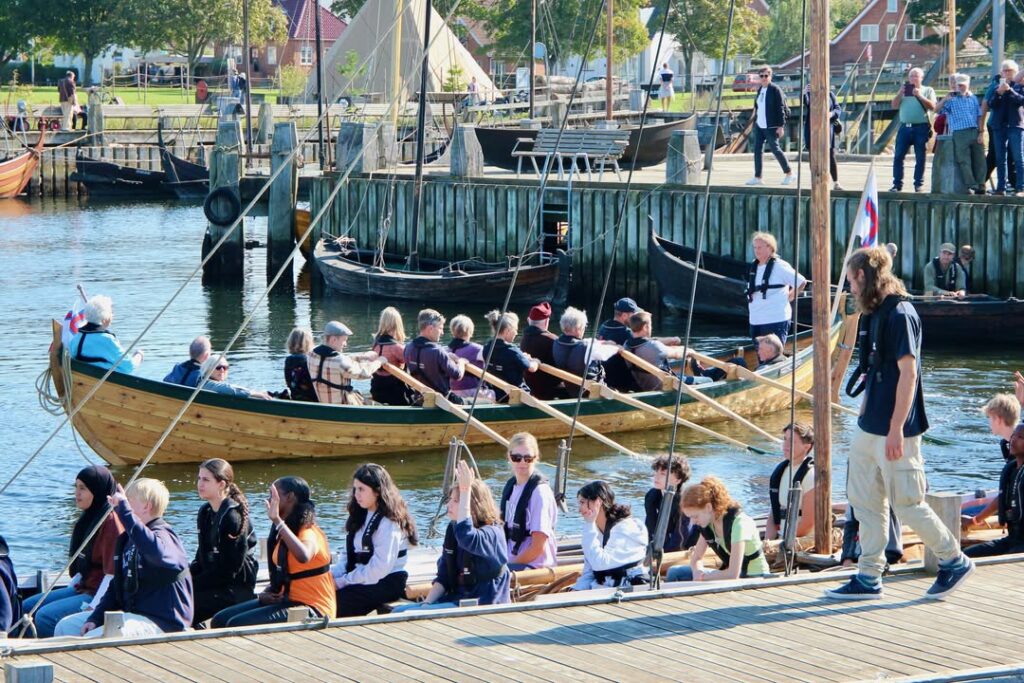
The museum centers on discovery, reconstruction, and preservation of Viking ships and their seafaring traditions.
Founded in 1969, the museum houses five well-preserved Viking ships, which were discovered in the Roskilde Fjord in the 1960s.
Specific Features:
The five Skuldelev ships are in the central exhibition hall that has functions such as war, trade, and fishing.
Visitors can also explore the boatyard, where craftsmen build and restore Viking-style ships using traditional methods.
Its highlight is to sail on reconstructed Viking ships in the fjord.
Interactive displays, workshops, and multimedia presentations enhance the educating experience, making it a hub for Viking history enthusiasts.
Architectural Design:
The modernist architectural style of the museum is characterized by a simple, functional design.
Large glass walls of the main building allow natural light to illuminate the ship exhibits and provide panoramic views of Roskilde Fjord.
The structure of concrete and wood reflects the contrast between contemporary architecture and the ancient Viking traditions that it preserves.
The spacious interior is open, and it complements the grandeur of displaying ships so that there is a smooth transition between a historical view and a landscape.
| Architectures | – |
| City | Roskilde |
| Year | 1969 |
2. Rubjerg Knude Fyr
Overview:
Rubjerg Knude Fyr is one of the famous lighthouses in northern Denmark, on the North Sea coast.
Constructed in 1900, it gained more fame for fighting against coastal erosion and shifting dunes of sands.
It was decommissioned in 1968 because the advance of sands hindered the vision of ships about its light.
In 2019, it was successfully relocated 70 meters inland to avoid its collapse into the sea.
Specific Features:
Over the years, it has been almost entirely buried by drifting sand dunes, creating a surreal, otherworldly landscape.
Today, it serves as a tourist attraction where visitors can climb to the top for breathtaking views of the North Sea and the dramatic coastline.
This place is characterized by vast, windswept dunes, and it is the only natural site in Denmark of its kind.
Architectural Design:
Rubjerg Knude Fyr is built in a traditional lighthouse style with a cylindrical brick tower and a lantern room at the top.
The design is simple and functional, and the weathered white facade blends into the sands.
The extraordinary engineering feat of relocating it in 2019 was achieved by hydraulic systems that could lift and transport the lighthouse safely.
This preservation effort reflects Denmark’s commitment to saving its historical landmarks from natural forces.
| Architectures | – |
| City | Hjorring |
| Year | 1900 |
3. Kronborg Slot
Overview:
Kronborg Castle, located in Helsingør, is one of Denmark’s most famous castles and a UNESCO World Heritage Site.
It was built in 16th century and famous because ‘Hamlet‘ by William Shakespeare was staged here.
The castle played a strategic role in controlling access to the Baltic Sea and was a symbol of Denmark’s naval power.
Specific Features:
Underground casemates, dark tunnels beneath the castle, house a statue of Holger Danske, a legendary Danish warrior said to awaken if Denmark is in danger.
The castle also has a chapel with intricate wood carvings and a stunning organ.
Throughout the year, Shakespearean performances are held in the courtyard, which attracts literature and history enthusiasts.
Architectural Design:
Kronborg Castle is an example of Renaissance architecture, which features a symmetrical layout, high towers, and elegant sandstone facades. It has a strong fortification system, with bastions and moats, which reflects its military importance.
The Dutch and Flemish influences are evident in the design, with intricate spires, ornate window frames, and beautifully carved details.
| Architectures | Renaissance |
| City | Helsingør |
| Year | 1574 |
4. Roskilde Cathedral
Overview:
Roskilde Cathedral is Denmark’s most important religious edifice and a UNESCO World Heritage Site.
It was built in the 12th century as a burial place for Danish kings and today forms an essential cultural and architectural site.
It played a central role in the spread of Christianity in Scandinavia and, therefore, remains a significant pilgrimage site till today.
Specific Features:
The cathedral houses nearly 40 tombs of Danish kings and queens, making it one of Europe’s most historically significant royal burial sites.
It contains an impressive collection of chapels, altars, and sculptures, including the ornate tomb of Queen Margrethe I.
The Grand Organ, dating back to the 1600s, is still used for services and concerts.
There is also an extensive exhibition on Denmark’s royal history and Christian heritage.
Architectural Design:
Roskilde Cathedral is one of the greatest examples of Gothic and Romanesque architecture.
Built primarily out of red brick, it was one of the first large churches in Scandinavia to make use of the material, a style later seen in the Nordic designs of many other churches.
Its twin towers characterize the skyline; pointed arches, ribbed vaults, and decorative facades characterize the Gothic features of this cathedral.
Several chapels and extensions have been added over the years, bringing into its design the Renaissance, Baroque, and Neo-Gothic elements.
| Architectures | – |
| City | Rosklide |
| Year | Construction began c. 1170, with the main structure completed c. 1200 |
5. Lindholm Hoje Museum
Overview:
Lindholm Høje is one of Denmark’s most important Viking-era burial sites, located near Aalborg.
The museum was opened in 1992 and preserves and exhibits the archaeological finds from this ancient cemetery, which contains hundreds of Viking and Iron Age graves.
The site provides a fascinating glimpse into Viking burial customs and daily life.
Specific Features:
The burial site has more than 700 stone-marked graves, some of which date back to the 5th century.
The museum has artifacts that were excavated, such as tools, weapons, and jewelry, giving an idea of Viking culture.
There are reconstructed Viking houses and interactive exhibits explaining burial rituals, farming, and maritime traditions.
Visitors can walk around the open-air site and see the unique stone formations marking each grave.
Architectural Design:
The very museum building seems to melt away in the environment around it by virtue of having earth-colored color structure and walls that seem slanted just like those in a Viking longhouse.
In turn, in its inner places, there have been made utilization of natural wood material and low-lit ambient.
On the outdoors, there was no burial mound touched to try and show an appreciation to one’s ancestors on a Viking point of view as huge stones made into big circles where those interred sit.
| Architectures | The museum is part of an archaeological site with Viking and Iron Age burial mounds. The museum building itself is modern. |
| City | Aalborg |
| Year | The burial site dates back to 400-1000 AD, with the first major archaeological excavation beginning in 1952. The museum is a more recent addition. |
Natural Landmarks

- Mons Klint
- Rold Skov Forest
- Grenen
- Mols Bjerge
- Lille Vildmose
1. Mons Klint
Overview:
Møns Klint is a spectacular stretch of 6 kilometers of white chalk cliffs on the island of Møn in southeastern Denmark.
The cliffs that rise a fantastic 128 meters over the Baltic Sea were laid 70 million years ago, created from compressed microscopic sea creatures.
This is one of the famous natural attractions in Denmark with thousands of visitors each year, enjoying a breath-taking view and rich biodiversity here.
Specific Features:
Møns Klint is known for the striking white chalk cliffs contrasting with the bright turquoise waters of the Baltic Sea and the rich green forests above.
The rare flora and fauna can be seen along the cliffs, including various orchids and the endangered Apollo butterfly.
The visitors may view hiking trails, fossil hunting grounds, and the GeoCenter Mons Klint, which is an interactive museum that holds the geological history of the region. Paragliding can also be done on the cliffs, as well as birdwatching.
Architectural Design:
While Mons Klint is a natural site, the visitor facilities such as the GeoCenter Møns Klint are modern, eco-friendly buildings that blend well with the landscape.
The museum design uses natural materials like wood and stone, and large glass windows provide panoramic views of the cliffs and sea.
The wooden staircases leading down to the beach are constructed with care to avoid environmental impact but allow access to the dramatic shoreline.
2. Rold Skov Forest
Overview:
Rold Skov is Denmark’s second largest forest, with an area of about 80 square kilometers in North Jutland.
Ancient trees, deep mossy landscapes, and mysterious legends have made this one of the most ecologically diverse regions in the country.
The forest contains some of Denmark’s oldest beech and oak trees, as well as rare plant and animal species.
Specific Features:
Rold Skov is known for its “Troll Forest” (Troldeskoven), where twisted and gnarled trees create a mystical atmosphere.
The forest also contains several freshwater springs, including the famous “Blue Spring” (Store Blåkilde), known for its crystal-clear water and deep blue hue.
The visitors can enjoy hiking, cycling, and horseback riding along the numerous trails.
The Rebild Bakker National Park is also located within the forest, and it hosts the largest Fourth of July celebration in Denmark annually due to its historical connection with Danish immigrants in the United States.
Architectural Design:
Its wooden structures with grass-covered roofs blend so well into the natural surroundings that one hardly ever sees them as part of the larger forest.
In addition, several old watermills and hunting lodges abound in the forest, which prove Denmark’s history in forestry and land management.
The wooden bridges and observation decks facilitate access to the scenic springs and wetlands with minimal environmental footprint.
Kindly Read: Iconic Landmarks of Dubai: A Glimpse into Architectural Marvels of 20th Century
3. Grenen
Overview:
Grenen is Denmark’s northernmost point, which is close to Skagen where the North Sea and the Baltic Sea meet.
This natural wonder creates a distinct separation between the two waters with their currents crashing against each other but not mixing.
Thousands of visitors have flocked to Grenen, which is one of the country’s most photographed spots, just to stand at the tip of Denmark and experience this rare marine phenomenon.
Specific Features:
One of the most famous attractions on Grenen is the “Sandworm” tractor-bus, which takes visitors across the sandy dunes to the very end of the peninsula.
Because of the strong currents, swimming is not allowed, but visitors can wade in the shallow waters and feel the surreal experience of standing between two seas.
Birdwatching is also a prime attraction at Grenen, as it lies on an important migratory route for many bird species.
The Skagen Bunker Museum, located nearby, provides insight into the military history of the area, with remnants of German World War II fortifications.
Architectural Design:
This is a natural coastal landmark, with no significant architectural structures, but the facilities located nearby, like the Skagen Odde Nature Center, exhibit minimalist Scandinavian architecture.
It was designed by Sydney architect. The Nature Center features sleek geometric forms, raw concrete surfaces, and large windows that emphasize natural light and the surrounding seascape.
Wooden walkways and viewing platforms allow visitors to experience Grenen without disturbing its fragile ecosystem.
4. Mols Bjerge
Overview
It has rolling hills, glacially-formed valleys, heathlands, and ancient forests.
It was named after the “Mols Hills,” a rugged terrain created by retreating glaciers during the Ice Age.
The area has diverse flora and fauna, such as wild ponies, red deer, and rare butterflies.
Specific Features:
Mols Bjerge is known for offering various outdoor activities such as hiking, cycling, and horse riding through well-maintained trails.
It is home to some historical monuments, such as Kalø Castle Ruins, which are a medieval fortress from the 14th century.
The other attraction is Stubbe Lake, the largest lake in the area, famous for its birdlife and peaceful environment.
Architectural Design:
The visitor center at the national park adheres to the principles of sustainable architecture through green wooden buildings and their rooftops.
The castle ruins at Kalø offer the essence of historic architecture, using bricks and stones for medieval walls.
The observation towers in wood, with small, cozy shelters for a more primitive and comfortable visitation of nature are located at each and every spot of the park.
5. Lille Vildmose
Overview:
It is an important wetland ecosystem, hosting a large variety of plant and animal species, including Denmark’s only wild elk population.
The area was previously used for peat extraction but has since been restored to its natural state, making it one of the most important nature conservation areas in Denmark.
Specific Features:
Lille Vildmose is known for its expansive open boglands, lakes, and dense forests.
Wildlife found here includes golden eagles, wild boars, and moose.
There are wooden boardwalks over the wetlands that visitors can use to experience nature up close without causing any damage to the fragile ecosystem.
The Lille Vildmose Visitor Center is also known for its “floating forest,” where trees grow on unstable peat soil.
Architectural Design:
The visitor center is made of sustainable materials and has large glass windows that provide a panoramic view of the boglands.
Elevated wooden boardwalks and viewing platforms allow visitors to explore the wetland safely while protecting its delicate ecosystem.
The minimalistic architectural design ensures that human structures do not dominate the landscape but rather blend harmoniously with the natural environment.
Denmark’s Cutting-Edge Urban Innovations: Shaping the Cities of Tomorrow
- Greater Copenhagen Light Rail
- Project Greensand CO₂ Storage
- Copenhagen Sprint
- Carbon-Neutral Initiatives
- 2025 UCI BMX World Championships
1. Greater Copenhagen Light Rail
The Greater Copenhagen Light Rail is a green public transport initiative that would improve the connectivity in the capital region.
The route will be for 28 km with 29 stations, which would enable comfortable travel between suburbs.
The system would reduce congestion and carbon emissions as it encourages green transportation.
Its state-of-the-art energy-efficient trams would easily fit into the existing transport framework.
2. Project Greensand CO₂ Storage
Project Grennsand CO2 has aims to store millions of tons of CO₂ in depleted oil fields, helping Denmark meet its climate goals.
The project uses advanced technology to safely and permanently sequester carbon underground.
It is a key step toward Denmark’s goal of becoming climate-neutral by 2050.
3. Copenhagen Sprint
Copenhagen Sprint is an innovative urban development initiative on sustainable mobility and smart city solutions.
It integrates eco-friendly technologies to enhance the livability and efficiency of the city.
4. Carbon-Neutral Initiatives
Denmark is at the forefront of numerous carbon-neutral projects to combat climate change and further reduce emissions.
These projects involve the extension of renewable sources, green transport systems, and sustainable urban planning.
Copenhagen becomes carbon-neutral by 2025 using wind energy, district heating, and smart waste management.
These projects make Denmark the leader in sustainable development across the globe.
5. 2025 UCI BMX World Championships
The 2025 UCI BMX World Championships will be held in Denmark, an international home for the top performers of BMX racing worldwide.
It will be a major cycling event that promotes BMX racing and makes Denmark even friendlier to sports.
Denmark has adopted the championship as being based on world-class conditions and eco-friendly commitment practices.
It aligns with Denmark’s commitment to sustainability and promoting an active lifestyle.
Conclusion
History, nature, and modern innovation blend into each other seamlessly in Denmark.
From the white towering cliffs of Møns Klint and the enchanting forests of Rold Skov to the historical grandeur of Kronborg Castle and Roskilde Cathedral, every destination tells a unique story.
Whether it is Viking sites, two seas meeting at Grenen, or the wonderful architecture of Copenhagen, Denmark is a journey in time and beauty.
With the country’s promise of sustainability, rich heritage, and natural wonders, Denmark remains an essential destination for history buffs, nature lovers, and adventure seekers alike.
FAQs
Which historical landmarks must I visit in Denmark?
Some of the most iconic historical sites include Kronborg Castle (Hamlet’s Castle), Roskilde Cathedral, Christiansborg Palace, and Rundetaarn.
What are the most beautiful natural landmarks in Denmark that I should see?
Some of the country’s most impressive natural attractions include Møns Klint, Grenen, Rold Skov Forest, Mols Bjerge, and Lille Vildmose.
When is the best time of year to visit Denmark’s landmarks?
Spring and summer (April–September) are pleasant weather times with long daylight hours and active outdoor activities, making them the best times to visit.
Can I explore Denmark’s landmarks on a budget?
Yes! Many landmarks, including natural sites and historical attractions, are free or low-cost to enter. Public transport and bike rentals are also very affordable.
What is special about Møns Klint?
Møns Klint has white chalk cliffs that shoot up dramatically above the Baltic Sea, with great views and rich fossil finds.
Are Denmark’s castles open to the public?
Yes, most castles such as Kronborg, Rosenborg, and Christiansborg are open for tours, showcasing Denmark’s royal history and architecture.
What transportation options are available for exploring Denmark’s landmarks?
Denmark has an excellent public transport system, including trains, buses, and bike-friendly roads, making it easy to travel between landmarks.
Are there any UNESCO World Heritage Sites in Denmark?
Yes, Roskilde Cathedral, Kronborg Castle, and the Jelling Stones are UNESCO-listed sites, so they hold a lot of historical and cultural importance.
What are the top outdoor activities to enjoy while traveling in Denmark?
Hiking, biking, kayaking, and wildlife watching are all popular outdoor activities, especially in nature reserves such as Mols Bjerge and Lille Vildmose.
Is Denmark a family-friendly travel destination?
Absolutely! Denmark offers attractions for families and children of all ages, including Tivoli Gardens, Legoland, Viking museums, and interactive nature experiences.