
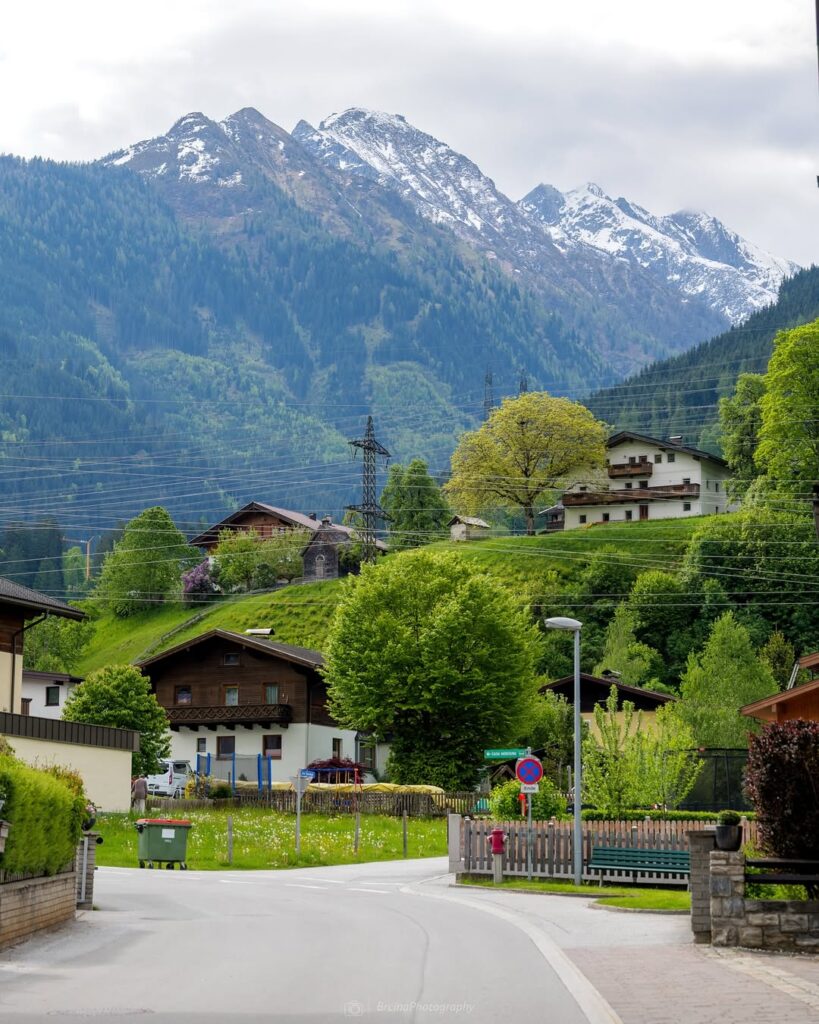
Discover the most iconic landmarks of Austria: from an enormous Schönbrunn Palace to breathe-taking Grossglockner Alpine Road.
Get to know the must-see wonders of the Alpine nation, saturated with history, culture, and magical landscapes.
Plan your unforgettable Austrian adventure today!
Introduction
Austria, known for its great alpine landscapes, rich cultural heritage, and architectural wonders, is home to some of Europe’s most prominent landmarks: from the grandeur of imperial representation in Vienna’s Schönbrunn Palace to the whimsical charm of fairy-tale village Hallstatt and the history-evoking Hohensalzburg Fortress.
History, nature, artistry-all blend perfectly together in Austria.
Whether you are visiting the grand Austrian Alps or the lively streets of Vienna, these must-see wonders capture the essence of this enchanting nation.
Key Aspects of Iconic Landmarks of Austria
- Architectural Magnificence:The structures of Austria’s landmarks, like Schönbrunn Palace and St. Stephen’s Cathedral, reflect the touch of Baroque, Gothic, and Renaissance architectural styles, thereby reflecting centuries of artistic mastery.
- Historical Importance: The sites such as Hofburg Palace and Hohensalzburg Fortress played significant roles in Austria’s imperial past and preserved the legacy of the Habsburg dynasty and medieval history.
- Natural Wonders:The sites such as Hallstatt and the Grossglockner High Alpine Road exemplify Austria’s breathtaking alpine views and adventures in a great outdoors.
- Cultural Heritage: The locations like Vienna State Opera and Salzburg’s Old Town pay respects to the country’s richly musical and artistic history bound deeply into the names of Mozart and Strauss.
- Tourism Attractions: Austria’s tourism attractions attract millions of visitors yearly, offering guided tours, experience immersion, and world-class hospitality, making these attractions must visits for travelers.
Iconic Landmarks of Austria
In accordance with virtualsocialhub.com the Iconic landmarks of Austria are:
- Drunstein
- Belvedere Palace
- The Vienna Hofberg
- The Spanish Riding School
- Hofburg and Hofkirche
- Hundertwasser Village
- St. Stephen Cathedral
- Maria Saal Cathedral
- Schönbrunn Palace
- Bergisel Ski Jump
- Golden Roof
- Festung Hohansalzburg
- Mozarts Geburtshaus
- Salzburg Salt Mines
- Mirabell Palce
- Hallstatt the Dachstein Salzkammergut
- Graz Clock Tower
- Grosslockner Alpine Road
- Highline 179- Reutte
- South Styria Wine Road
1. Drunstein
Overview
Dürnstein is a scenic village in the Wachau Valley of Austria, often said to be reminiscent of the medieval world with its vineyards and castle ruins where King Richard the Lionheart was once imprisoned.
Specific Features
- Dürnstein Castle Ruins: There is a Medieval fortress that once held King Richard the Lionheart as a prisoner.
- Baroque Dürnstein Abbey: It has A striking blue tower in the Danube River.
- Wachau Vineyards: The estate produces premium wines, including Grüner Veltliner and Riesling.
Architectural Design
The town is characterized by Baroque architecture, and its most famous landmark is the blue and white tower of Dürnstein Abbey.
The ruin of the castle above the town is characterized as the medieval fortress.
| Architectures | -Medieval -Gothic |
| City | Dürnstein |
| Year | 1140-1145 |
2. Belvedere Palace
Overview
A UNESCO-listed Baroque complex in Vienna, designed as a summer residence for Prince Eugene of Savoy, today an art museum complex with huge gardens.
Specific Features
- Upper and Lower Belvedere Palaces: It is a dual-palace with complex housing Austrian art.
- Gustav Klimt’s The Kiss: The palace has one of the most famous paintings in the world.
- French-Style Gardens: It has enchanting fountains, statues, and geometric layouts.
Architectural Design
Designed in Baroque style by Johann Lukas von Hildebrandt, with symmetrical facades, grand staircases, and elaborate stucco decorations.
| Architectures | Baroque |
| City | Vienna |
| Year | 1714-1723 |
3. The Vienna Hofberg
Overview
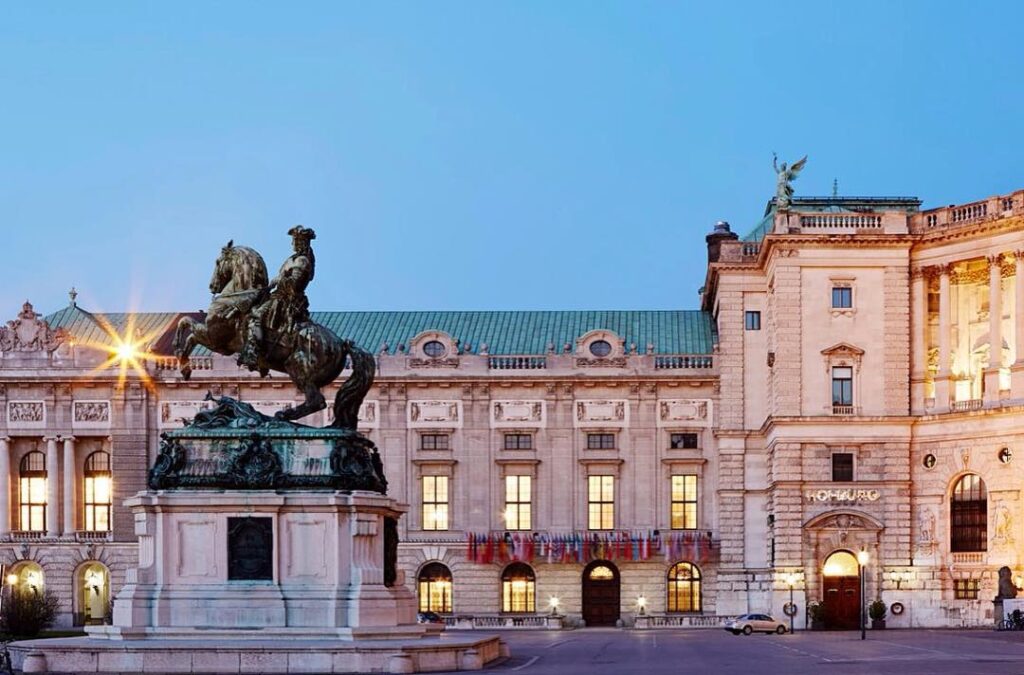
Hofburg is the imperial palace in Vienna. Formerly the residence of the great Habsburg Empire, now housing Austria’s president and a group of museums.
Specific Features
- Imperial Apartments: It exquisites apartments for use by the Habsburg emperors.
- Sisi Museum: The Vienna Hofberg features the personal items of Empress Elisabeth, commonly known as Sisi.
- Austrian National Library: The hall of great grandeur, decorated with frescoed ceilings and olden books.
Architectural Design
This complex was made in an ensemble of styles- Gothic, Renaissance, Baroque, and Rococo-with white marble façades, lavish courtyards, and imposing domes.
| Architectures | -Baroque -Rococo |
| City | Vienna |
| Year | -Began construction in the 13th century -Most of the palace dating from the 15th century to the 20th century |
4. The Spanish Riding School
Overview
A world-famous institution for classical dressage, where Lipizzaner stallions perform elegant movements.
Specific Features
- Lipizzaner Stallions: A rare breed trained for high-level dressage.
- 450-Year Training Tradition: The horses are trained for up to 10 years.
Architectural Design
Built in Baroque style, the Winter Riding School features high vaulted ceilings, chandeliers, and a royal viewing gallery.
| Architectures | Baroque |
| City | Vienna |
| Year | 1725-1735 |
5. Hofburg and Hofkirche
Overview
The Hofburg Palace in Vienna has been the royal residence of the Habsburgs for over six centuries, and the Hofkirche (Court Church) in Innsbruck is famous for its Imperial tomb and bronze statues.
Specific Features
- Imperial Silver Collection: It displays the extravagant gold and silverware.
- Maximilian I’s Cenotaph (Hofkirche): It has features of 28 large bronze statues of rulers.
- Spanish Hall: A grand Renaissance-style hall inside the Hofburg of Innsbruck.
Architectural Design
Hofburg: Gothic, Renaissance, and Baroque style with intricate facades, domes, and imperial rooms of great grandeur.
| Architectures | -Late Baroque -Renaissance |
| City | Innsbruck |
| Year | -Construction began in the mid-15th century -Rebuilding and extensions in the 16th and 18th centuries |
6. Hundertwasser Village
Overview
A colorful, eco-friendly artistic village in Vienna designed by Friedensreich Hundertwasser, celebrating nature and creativity.
Specific Features
- Mosaic Facades: It is constructed with brightly colored ceramic tiles and irregular patterns.
- Rooftop Gardens: It is covered with trees and plants, which infuses nature in the design.
- Uneven Floors: The floors are deliberately made wavy to give it a more natural feel.
Architectural Design
An organic architectural style with irregular shapes, wavy floors, and lush rooftop gardens—a stark contrast to traditional city buildings.
| Architectures | – |
| City | Vienna |
| Year | 1990-1991 |
7. St. Stephen Cathedral
Overview
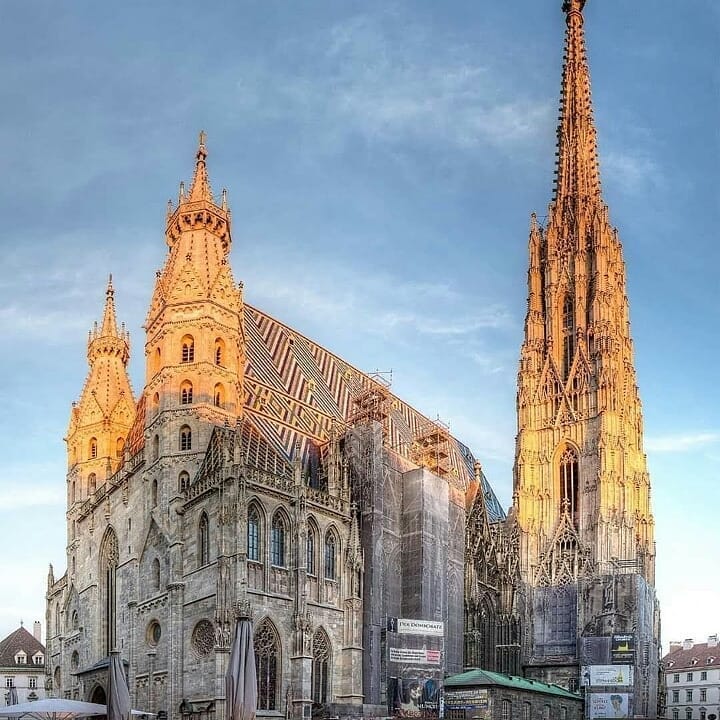
A Gothic wonder in the center of Vienna, St. Stephen’s Cathedral is Austria’s most iconic church and features a high spire, colorful roof tiles, and rich history.
Specific Features
- Multi-Colored Tiled Roof: It displays Vienna’s and Austria’s heraldic symbols with multi-colored tiled roof.
- South Tower (Steffl): A viewing platform with breathtaking city views.
- Catacombs & Crypts: Holds the remains of Habsburg royals and bishops.
Architectural Design
Built in Gothic style, with a 136-meter-tall South Tower, detailed stone carvings, and a colorful mosaic roof with the Austrian coat of arms.
| Architectures | -Gothic -Romansque |
| City | Vienna |
| Year | 12th century |
8. Maria Saal Cathedral
Overview
Maria Saal Cathedral, located in Carinthia, is a major pilgrimage site and Austria’s oldest religious building.
Specific Features
- Twin-Towered Facade: It’s a classic Gothic facade featuring spires that are so delicate
- Medieval Frescoes: The most amazing 13th-century religious frescoes are located here.
- Ancient Graveyard: Stone sculptures and tombs fill this ancient burial ground.
Architectural Design
This church is Romanesque-Gothic in design, featuring twin towers, frescoed walls, and stone carvings.
| Architectures | -Gothic -Romansque |
| City | Maria Saal |
| Year | The church was restored after a fire in 1669 and took on its present appearance. |
9. Schönbrunn Palace

Overview
Historically, the grand baroque palace was originally the summer home of the Habsburg family, representing all the splendor of imperial Austria.
The beginnings of the grounds date back to the late 16th century when Emperor Maximilian II purchased it as a hunting ground.
However, the actual transformation of the grounds into a magnificent palace was commissioned in the 17th century by Emperor Leopold I.
Specific Features
- Great Galary: The palace comprises 1,441 rooms, out of which only 40 are open to visitors. The most notable space here is the Great Galary where frescoes and chandeliers once welcomed imperial banquets.
- Chinese Cabnit Rooms: The Chinese Cabinet Rooms have fragile porcelain and oriental motifs of the East.
- Schönbrunn Gardens: Behind the palace lies the equally stunning Schönbrunn Gardens, with the Gloriette, a grand hilltop, always providing breathtaking views over Vienna, and the Neptune Fountain, with artistic representation of classical mythology in its style.
- Schönbrunn Zoo: The Schönbrunn Zoo was also founded back in 1752 and is the oldest continuously operating zoo in the world.
Architectural Design H4
It is designed by Johann Bernhard Fischer von Erlach which is inspired by the Palace of Versailles, this grand house design was quite symmetric and based on axial composition.
| Architectures | -Baroque -Rococo |
| City | Vienna |
| Year | 1740-1780 |
10. State Opera House
Overview
The Vienna State Opera is one of the world’s leading opera houses, known for its exceptional acoustics and legendary performances.
It was opened in 1869 with a performance of Don Giovanni by Mozart and has hosted some of history’s greatest composers and conductors.
Specific Features
- Orchestra Pits: The opera house can seat 1,709 guests and boasts one of the largest orchestra pits in the world, holding more than 110 musicians.
- Vienna Opera Ball: Every year, it hosts the glamorous Vienna Opera Ball, a high-profile event attended by celebrities and dignitaries. The building was heavily damaged during World War II but was meticulously restored in the 1950s.
Architectural Design
The opera house was designed by Eduard van der Nüll and August Sicard von Sicardsburg in Neo-Renaissance style.
The plush red velvet upholstery for seats, gold ornaments, and a majestic crystal chandelier decorate the auditorium.
| Architectures | New Renaissance |
| City | Vienna |
| Year | 1861-1869 |
11. Bergisel Ski Jump
Overview
The Bergisel Ski Jump in Innsbruck is a venue that combines sports, architecture, and tourism.
It hosts the prestigious Four Hills Tournament and offers a stunning view of the Alpine landscape.
Specific Features
- The ski jumps tower stands at 90 meters tall, with a viewing platform offering panoramic views of Innsbruck.
- The site also features a glass-walled restaurant, which allows the visitors to dine while enjoying the breath-taking mountain views.
Architectural Design
Zaha Hadid has designed the ski jump with a futuristic and curvilinear steel structure that is blended seamlessly into the mountainous landscape.
It represents an ideal blend of form and functionality that serves as a landmark in modern architecture.
| Architectures | Contemporary |
| City | Innbruck |
| Year | 1999-2002 |
12. Golden Roof
Overview
Located in Innsbruck, the Golden Roof is a landmark built in the early 16th century for Emperor Maximilian I.
Specific Features
The Golden Roof Museum inside the building gives insight into Tyrolean history and Maximilian’s legacy.
Architectural Design
A mix of Gothic and late-medieval architecture, the building has ornate reliefs of Maximilian I and his wives. The golden tiles, which reflect sunlight, were a statement of imperial wealth and power.
| Architectures | Gothic |
| City | Innsbruck |
| Year | 1497-1500 |
13. Festung Hohansalzburg

Overview
Built in 1077, the sitting atop Festungsberg hill, Hohensalzburg Fortress is one of the biggest and most preserved medieval castles in Europe.
Specific Features
- Golden Chamber: The Golden Chamber is adorned with elaborate paintings and medieval furniture.
- Funicular Railway: A funicular railway is used to reach the fortress, which offers excellent views of Salzburg.
Architectural Design
It is a good example of Romanesque and Gothic military architecture.
The fortifications consist of thick defensive walls, turrets, and drawbridges.
Inside are luxurious halls that contrast with its rugged exterior.
| Architectures | Medieval |
| City | Salzburg |
| Year | 1077 |
14. Mozarts Geburtshaus
Overview
It is the house in Salzburg where Wolfgang Amadeus Mozart was born in 1756.
Today, it has been converted into a museum that presents his life and work.
Specific Features
The visitors can see rooms preserved as they were during Mozart’s time.
Architectural Design
The building is a traditional 18th-century townhouse, painted in bright yellow, making it one of Salzburg’s most recognizable landmarks.
| Architectures | Baroque |
| City | Salzburg |
| Year | -Built in the 17th century -Became a museum in 1880 |
15. Salzburg Salt Mines
Overview
The Salzburg Salt Mines are a significant source of economic prosperity since ancient times as they were a supplier of salt, also known as “white gold,” to Europe.
Specific Features
Tourists can take the mine train, visit salt lakes underground, and slide along wooden miner slides which were applied during the times.
Architectural Design
The mine consists of narrow tunnels carved into rock, supported by wooden beams, creating a fascinating underground world.
| Architectures | -This is a natural geological formation that was later mined. -The architecture is related to the mining tunnels and structures. |
| City | Hallein |
| Year | Salt has been mined here since the time of the Celts, around 4000 BCE. |
16. Mirabell Palace

Overview
A beautiful baroque palace in Salzburg, known for its stunning gardens and connections to The Sound of Music.
Specific Features
- The Marble Hall is one of Austria’s most beautiful wedding venues.
- The Mirabell Gardens include geometrically arranged flower beds and sculptures inspired by Roman mythology.
Architectural Design
Built in baroque style, the palace features elaborate stucco decorations and grand staircases.
| Architectures | Baroque |
| City | Salzburg |
| Year | -Originally built in 1606 -Redesigned in Baroque style in 1721 |
17. Hallstatt the Dachstein Salzkammergut
Overview
Hallstatt, a lake village famous for its Alpine scenery and ancient salt mines in the Salzkammergut region of Austria, has been a UNESCO World Heritage Site since it dates back to prehistoric times and was designated as one of Europe’s oldest continuously inhabited settlements with rich salt deposits.
The region of Dachstein Salzkammergut showcases breathtaking landscapes and glacial caves and serves as a scenic hiking trail.
Specific Features
- Hallstatt Skywalk: The Hallstatt Skywalk is a viewing platform at 360 metres above the village, enjoying a panoramic view of the lake and mountains.
- Salt Mine: The Salt Mine of Hallstatt, which is the oldest known salt mine in the world, offers guided tours through ancient mining techniques.
- Bone House (Beinhaus): The Bone House (Beinhaus) in St Michael’s Chapel houses over 600 intricately painted human skulls, a tradition going as far back as the 18th century.
Architectural Design
The region’s baroque Evangelical Church and Gothic Catholic Church reflect its religious history.
The town’s layout, with houses built on the hillside overlooking the lake, adds to its fairy-tale charm.
| Architectures | -The architecture is part of a cultural landscape, not a single structure. -It encompasses a mix of traditional alpine buildings. |
| City | Hallsatt |
| Year | The area has a history dating back to 4000 BCE due to salt mining. |
18. Graz Clock Tower
Overview
Located on top of Schlossberg Hill in Graz, the Clock Tower (Uhrturm) is one of the city’s most recognizable landmarks.
It was built in the 13th century and served as an important part of the medieval fortifications of the city.
Specific Features
The clock hands are reversed.
This was an original element of the design for the clock tower: its large hand denotes the hour while the small one shows the minutes.
The view from the structure is panoramic to the gardens full of greenery surrounding it.
The place could be accessed using a scenic funicular railway or a steep staircase.
Architectural Design
The half-timbered design of the tower, steep tiled roof, and three large clock faces make it look distinctly medieval.
The structure combines Gothic and Renaissance elements, reflecting its modifications over centuries.
| Architectures | Late Gothic |
| City | Graz |
| Year | 1560 |
19. Grossglockner High Alpine Road
Overview
The Grossglockner Alpine Road opened in 1935, 48 kilometers through the Hohe Tauern National Park, with great views of the Grossglockner (Austria’s highest peak, 3,798m).
Specific Features
- 36 hairpin turns: The road has 36 hairpin turns and reaches an elevation of 2,504 meters at the Edelweißspitze viewing platform.
- Franz-Josefs-Hohe: The Franz-Josefs-Hohe visitor center features breathtaking views of the Pasterze Glacier, Austria’s largest glacier.
Architectural Design
Designed for both aesthetic beauty and functionality, the road’s engineering blends seamlessly with the natural landscape.
The several stone bridges, tunnels, and viewing platforms are built to minimize environmental impact while offering breathtaking vistas.
| Architectures | -Engeering -Modernist |
| City | -Salzburg -Carinthia |
| Year | 1930-1935 |
20. Highline 179- Reutte
Overview
Highline 179 is a suspension bridge that crosses 406 meters over the Ehrenberg Castle ruins near Reutte, Austria.
It is one of the longest pedestrian suspension bridges in the world, suspended 114 meters above ground.
Specific Features
- Thrilling views of the Lech Valley and the Ehrenberg Fortress ruins are provided crossing on the bridge.
- For adventure lovers, the gliding experiences are enhanced when the bridge sways gently.
- At night, LED lighting systems adorn the bridge.
Architectural Design
Built with high-tensile steel cables, the bridge’s design ensures both stability and flexibility.
The lightweight structure was carefully integrated into the natural surroundings without altering the historical landscape.
| Architectures | Contemporary |
| City | Reutte |
| Year | 2014 |
Best Time to Visit Austria: Discover the Perfect Season for Your Trip
This is a year-round vacation destination that offers breathtaking landscapes, rich history, and exciting cultural experiences.
The best time to visit depends on your interests, such as skiing in the Alps, vibrant cities, and serene lakes and countryside.
Below, virtualsocialhub.com break down Austria’s seasons to help you choose the ideal time for your trip.
Kindly Read: Discover Denmark’s Most Breathtaking Landmarks: A Journey Through History and Beauty!
Spring (March to May): A Blooming Wonderland
Why Visit in Spring?
Spring in Austria is a beautiful season of renewal, with blooming flowers, pleasant weather, and fewer tourists.
The snow begins to melt, revealing lush green meadows and blossoming gardens, making it a great time for sightseeing and outdoor activities.
Top Activities & Attractions
- Danube Valley: Visit the Wachau region for wine-tasting tours, and scenic biking routes along the Danube River.
- Lake District (Salzkammergut): Take in tranquil boat rides around Wolfgangsee and Hallstätter See amidst vibrant nature.
- Easter Markets: Taste Austria’s Easter traditions, specifically in Vienna. Colorful markets and festive ceremonies are held everywhere.
Pros and Cons
✔ Less visitors than summer
✔ Good weather with the possibility to visit the cities and hike in the mountains
✘ Some mountainous trekking trails cannot be accessed as they are still covered with snow
Summer (June to August): High Season
Why Visit in Summer?
Summer is the most active and warmest season of the year, with many opportunities for outdoor adventures, music festivals, and cultural events.
The days are long and sunny, so it’s an excellent time to go hiking, have fun in the lakes, and explore the place.
Top Activities & Destinations
- Alpine Hiking & Adventure Sports: Visit Grossglockner Alpine Road, Hallstatt Dachstein region, and Tyrol’s mountains for breathtaking hikes and paragliding.
- Vienna & Salzburg Festivals: Attend Vienna’s outdoor concerts and the renowned Salzburg Festival, featuring operas by Mozart and other great classical music.
- Austrian Lakes & Countryside: Unwind at lakes like Wolfgangsee, Mondsee, and Achensee, which are ideal for swimming, and sunbathing.
- Wachau Valley Wine Tours: The summer months are ideal to visit Austria’s vineyards and wineries, especially in South Styria.
Pros & Cons
✔ Beautiful hiking weather, lakes, and festivals
✔ Bustling cities with many cultural events
✘ More expensive and touristy destinations
✘ Cities are pretty hot during the season
Autumn (September to November): The Best Scenic and Cultural Retreat
Why Visit in Autumn?
Autumn brings cooler temperatures, fewer crowds, and stunning fall foliage.
It’s a great time for wine tasting, nature walks, and cultural trips before winter arrives.
Top Activities & Destinations
- Wine Harvest Season: Go wine tasting in South Styria and the Wachau Valley, as vineyards become golden.
- Vienna & Salzburg: Visit museums, historical landmarks, and autumnal parks such as Schönbrunn Gardens and Stadtpark.
- Alps & Countryside: Enjoy the beautiful Austrian Alps autumn foliage and Grossglockner High Alpine Road before the winter season begins.
- Pumpkin & Harvest Festivals: Explore local harvest festivals in Styria and Carinthia, enjoying seasonal food and traditions.
Pros & Cons
✔ Beautiful autumn landscapes and wine tastings
✔ Good weather and fewer crowds
✘ Short daylight hours in late autumn
✘ Some attractions start to close for the winter
Winter (December to February): A Winter Wonderland
Why Visit in Winter?
Austria in the winter is just magic, snow-dusted landscapes, festive Christmas markets and world-class skiing.
For both the keen skier or a holiday fanatic, this is sure to be an unforgettable experience.
Top Activities & Destinations
- Christmas Markets: Experience the festive atmosphere at Vienna’s Rathausplatz Christmas Market and Salzburg’s Christkindlmarkt, complete with mulled wine and handmade crafts.
- Skiing & Snowboarding: Try world-class ski resorts such as Kitzbühel, St. Anton, and Zell am See, to have the ultimate slopes for beginners as well as seasoned players.
- Hallstatt & Salzburg in Snow: See Austria’s most picturesque towns covered with snow, making this a fairytale winter scene.
- Thermal Spas & Winter Wellness: Enjoy thermal baths at Bad Gastein and Aqua Dome. Soak up the hot mineral waters and experience snow-covered mountains in the backdrop.
Pros & Cons
✔ Excellent for skiing and other winter sports
✔ Christmas mood and atmosphere
✘ Can be very chilly in January, even freezing cold.
✘ Certain attractions for non-skiing folks not easily accessible.
Austria’s Pioneering Urban Innovations: Transforming Cities for the Future
Here is the list of fAustrian future projects by virtualsocialhub.com:
- Luegbrucke Reconstruction
- Rail Network Investment
- NXP’s R&D Projects
- Wien Energie’s and Gas Diversification
- Vienna’s Cultural Celebration
1. Luegbrucke Reconstruction
The Luegbrücke is an important bridge on the A13 Brenner Motorway in Tyrol, Austria.
It has been in operation for more than 55 years and needs to be fully replaced.
The construction work is expected to begin in spring 2025, once all the required permits are acquired.
During the reconstruction phase, traffic will be limited to a single lane in each direction starting January 2025 to ensure safety and maintain operational continuity.
2. Rail Network Investment
Austria will invest a massive amount of €21.1 billion in its rail infrastructure over the period of 2024-2029.
This will be a result of the efforts of the Climate Protection Ministry, in cooperation with Austrian Federal Railways (ÖBB), that will help in increasing capacity with new and upgraded lines.
It is part of a broader strategy of Austria to support the promotion of rail as a sustainable means of transportation by moving from road to rail travel.
3. NXP’s R&D Projects
The research and development department of NXP Semiconductors, a leading global chipmaker, has received a boost in Austria.
The company has received a €1 billion loan from the European Investment Bank (EIB) for funding R&D projects in five European countries, including Austria.
The projects would mainly target developing new power electronics devices and also new microprocessors and microcontrollers with focus areas on reducing energy consumption.
NXP Austria will also contribute towards the Important Project of Common European Interest on Microelectronics and Communication Technologies, designated as IPCEI ME/CT.
One of its critical areas includes “highly secured post-quantum processing and communication systems”, as well as “reliable battery management system for green mobility”
4. Wien Energie’s and Gas Diversification
Wien Energie, the main power company in Vienna, has announced plans to stop using Russian natural gas by 2025.
This is part of Austria’s broader efforts to reduce dependence on Russian energy sources.
To achieve this goal, Wien Energie has secured alternative gas supplies, primarily from the North Sea region, to serve its clients, power plants, and district heating systems.
This strategic move enhances energy security and reduces the risk associated with geopolitical tensions.
5. Vienna’s Cultural Celebration
Vienna is one of the world’s most vibrant cultural centers, but its special pride lies in the wide-sweeping music of the society.
These happenings showcase Vienna’s efforts at heritage preservation and how it enjoys celebrating cultural traditions.
This makes the vibrant performances, markets, and celebrations exhibit the artistic and historical importance of the city.
Conclusion
Austria is the place of the most iconic landmarks in Europe where history, culture, and natural beauty converge.
From the grand Schönbrunn Palace to the majestic Grossglockner Alpine Road, these wonders offer visitors a unique opportunity to experience the charm of Austria in its purest form.
Whether you take in the Hohensalzburg Fortress to see the country’s history, or you walk through the magnificent State Opera House, Austria is guaranteed to be a trip of discovery for those wanting both cultural significance and natural beauty.
Don’t miss out on the Alpine nation must-see wonders.
FAQS
What are the top landmarks to visit in Austria?
Top attractions include Schönbrunn Palace, the State Opera House, Grossglockner Alpine Road, Hohensalzburg Fortress, and the Golden Roof.
What is the Grossglockner Alpine Road?
The Grossglockner Alpine Road is a scenic route that offers breathtaking views of Austria’s highest mountain, the Grossglockner, and the surrounding national park.
How long does it take to tour the Hohensalzburg Fortress?
It usually takes about 1.5 to 2 hours if you choose more activities as you visit Hohensalzburg Fortress.
Is there any skiing area in or around Grossglockner?
Yes, good skiing opportunities are found in the regions of Grossglockner, with Zell am See and Kaprun being the resorts closest to it.
Can I visit Mozart’s Birthplace?
Yes, there is Mozart’s Birthplace Museum in Salzburg, which also gives the people an idea about the life of the great composer and is visited by the people.